





Smith's Blenny - Meiacanthus smithi
Notify Me When In Stock
The Smith’s Blenny (Meiacanthus smithi) is a sleek Indo-West Pacific fangblenny known for its pale body, bold dark lateral stripe, active swimming behavior, and peaceful reef presence. This compact species is well suited for established marine aquariums with secure rockwork, open swimming space, compatible tankmates, and a varied diet of small marine foods.


- Description
- Additional Information
- Reviews
Smith’s Blenny – Meiacanthus smithi Care Guide
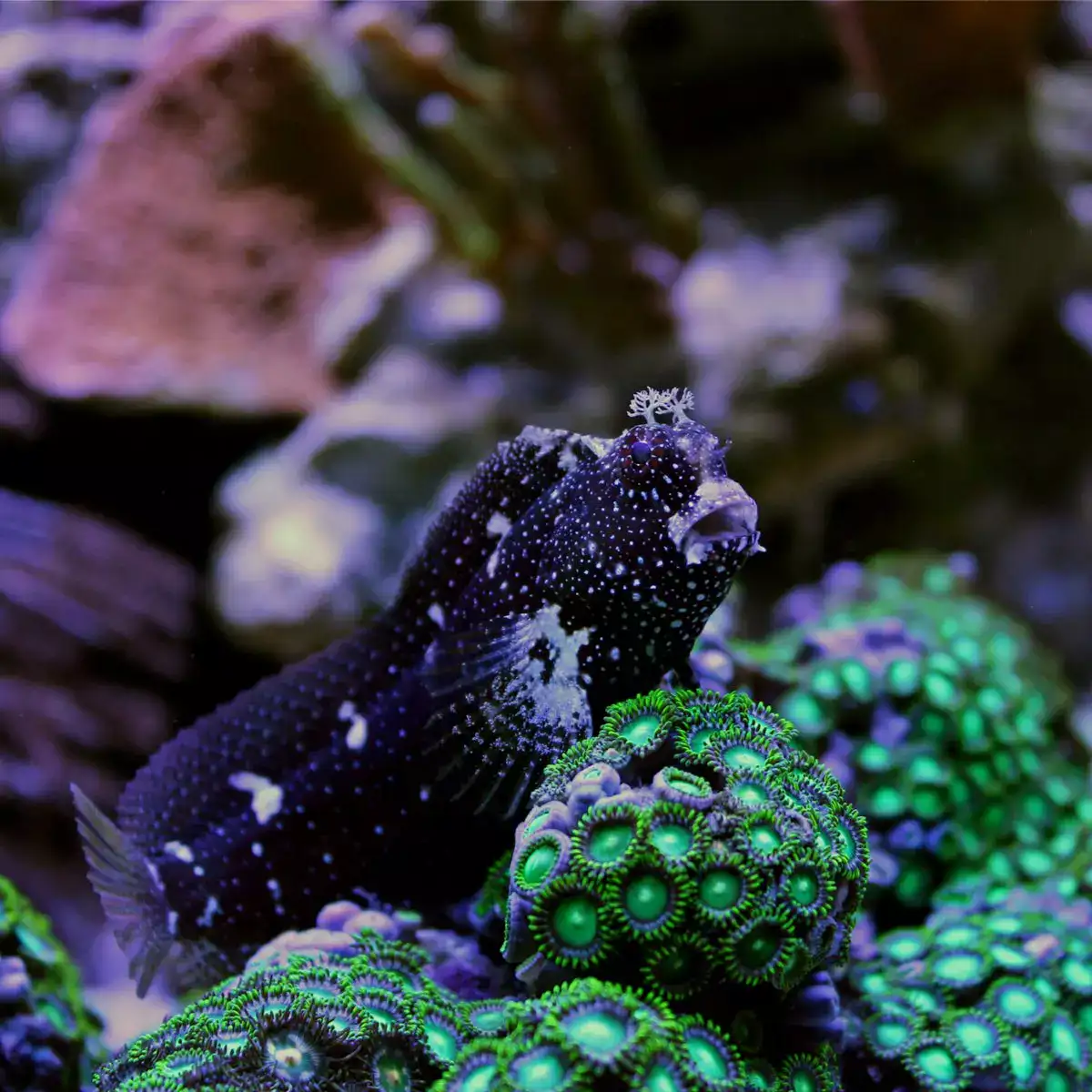
The Smith’s Blenny (Meiacanthus smithi) is an attractive Indo-West Pacific fangblenny known for its elongated body, bold dark stripe, active swimming style, and engaging aquarium behavior. Also known as the Disco Blenny or Smith’s Harptail-Blenny, this species belongs to the fangblenny genus Meiacanthus.
Unlike many traditional blennies that spend much of their time perched on rockwork, Meiacanthus smithi regularly swims through open water and may remain highly visible throughout the aquarium.
Browse additional saltwater blennies to compare species, sizes, behaviors, and aquarium requirements.
Smith’s Blenny Appearance
Meiacanthus smithi has a slender, streamlined body with pale cream to silvery coloration and a prominent dark horizontal stripe extending along the side.
The dark stripe creates a clean, contrasting pattern that gives the fish a distinctive appearance even at its relatively small adult size.
This species resembles some closely related fangblennies, but its stripe pattern and lack of stronger yellow markings help distinguish it from similar species.
Exact coloration can vary naturally with maturity, condition, geographic origin, and aquarium lighting.
Behavior and Temperament
Smith’s Blenny is generally considered peaceful to moderately assertive and can work well in many community reef aquariums.
Adults occur around coastal and inner reef habitats and may be encountered alone or occasionally in pairs.
In the aquarium, this species commonly moves through open water rather than remaining permanently perched on the substrate.
Territorial behavior is most likely toward closely related fangblennies or similarly shaped fish, particularly in smaller aquariums.
Fangblenny Defense System
Meiacanthus smithi belongs to a group of fangblennies equipped with specialized grooved canine teeth associated with venom glands.
This adaptation is used primarily for defense against predators rather than for routinely attacking aquarium tankmates.
The fish should not be handled directly by hand, and care should be taken during capture or transfer.
Natural Habitat and Distribution
Meiacanthus smithi occurs in the Indo-West Pacific.
Its documented range includes northern Sri Lanka, southeastern India, and portions of Indonesia including the western Java Sea.
Adults inhabit coastal and inner reef environments from approximately 1 to 20 meters deep.
An aquarium with secure rockwork, sheltered retreat areas, and open swimming space provides an appropriate environment for this active reef species.
Smith’s Blenny Aquarium Setup
A mature aquarium of approximately 30 gallons or larger is recommended for a single Smith’s Blenny.
Provide stable live rock or reef structure with caves and crevices for shelter while leaving open swimming space through the middle and upper portions of the aquarium.
Good filtration, stable marine water chemistry, and moderate circulation help create suitable long-term conditions.
A secure aquarium lid is recommended because active blennies may jump when startled.
Smith’s Blenny Diet and Feeding
Smith’s Blenny should be offered a varied omnivorous to planktivorous marine diet.
Recommended foods include:
- Mysis shrimp
- Enriched brine shrimp
- Copepods
- Calanus and other small planktonic foods
- Frozen marine blends
- Finely chopped marine seafood
- High-quality marine pellets
- Marine flakes
Offer one to several small meals per day depending on aquarium stocking and body condition.
A varied diet helps support healthy weight, activity, and coloration.
Is Smith’s Blenny Reef Safe?
Smith’s Blenny is generally considered reef compatible and can be maintained with corals and compatible reef invertebrates.
Its feeding behavior is centered on small marine foods rather than coral tissue.
Its peaceful temperament and compact size make it a strong candidate for established mixed reef aquariums.
Suitable Tankmates for Smith’s Blenny
Suitable tankmates may include:
- Clownfish
- Gobies
- Cardinalfish
- Chromis
- Anthias
- Fairy and flasher wrasses
- Peaceful dwarf angelfish
- Other compatible community reef fish
Use caution when combining multiple Meiacanthus species or similarly shaped fangblennies unless the aquarium provides ample space and separate territories.
Smith’s Blenny Care Facts
- Care Level: Easy to Moderate
- Temperament: Peaceful to Moderately Assertive
- Diet: Omnivore / Planktivorous Feeder
- Reef Compatible: Yes
- Minimum Tank Size: Approximately 30 gallons
- Maximum Size: Approximately 3.3 inches
- Natural Range: Indo-West Pacific
- Natural Depth: Approximately 1–20 meters
- Natural Habitat: Coastal and inner reef environments
- Family: Blenniidae
- Scientific Name: Meiacanthus smithi
- Common Names: Smith’s Blenny, Disco Blenny, Smith’s Harptail-Blenny
Recommended Water Parameters
- Temperature: 74–80°F
- Specific Gravity: 1.020–1.025
- pH: 8.1–8.4
- Alkalinity: 8–12 dKH
Why Choose Smith’s Blenny?
Smith’s Blenny combines a clean striped appearance, active swimming behavior, manageable adult size, reef compatibility, and the fascinating defensive adaptations of a fangblenny.
Its tendency to swim visibly throughout the aquarium makes it especially appealing for aquarists who want a blenny that spends more time in open water than many traditional rock-perching species.
For a mature reef aquarium with secure rockwork, open swimming space, stable water quality, and peaceful tankmates, Meiacanthus smithi can make an excellent addition.
Frequently Asked Questions About Smith’s Blenny
What is the scientific name of Smith’s Blenny?
The accepted scientific name is Meiacanthus smithi.
How large does Smith’s Blenny get?
Meiacanthus smithi reaches approximately 3.3 inches in total length.
Where is Smith’s Blenny found naturally?
The species occurs in the Indo-West Pacific, including northern Sri Lanka, southeastern India, and parts of Indonesia such as the western Java Sea.
What habitat does Smith’s Blenny prefer?
Adults inhabit coastal and inner reef environments from shallow water to approximately 20 meters deep.
Is Smith’s Blenny venomous?
Like other Meiacanthus fangblennies, it possesses venom-associated grooved fangs used primarily as a defense against predators.
Is Smith’s Blenny aggressive?
It is generally peaceful with unrelated reef fish but may become territorial toward closely related fangblennies or similarly shaped species.
Is Smith’s Blenny reef safe?
Yes. It is generally considered reef compatible and can be maintained with corals and compatible reef invertebrates.
What should I feed Smith’s Blenny?
Offer mysis shrimp, enriched brine shrimp, copepods, Calanus, frozen marine blends, high-quality pellets, flakes, and other appropriately sized marine foods.
What size aquarium does Smith’s Blenny need?
A mature aquarium of approximately 30 gallons or larger is recommended for a single specimen.

Reviews
There are no reviews yet.