




Scooter Blenny - Synchiropus ocellatus
Notify Me When In Stock
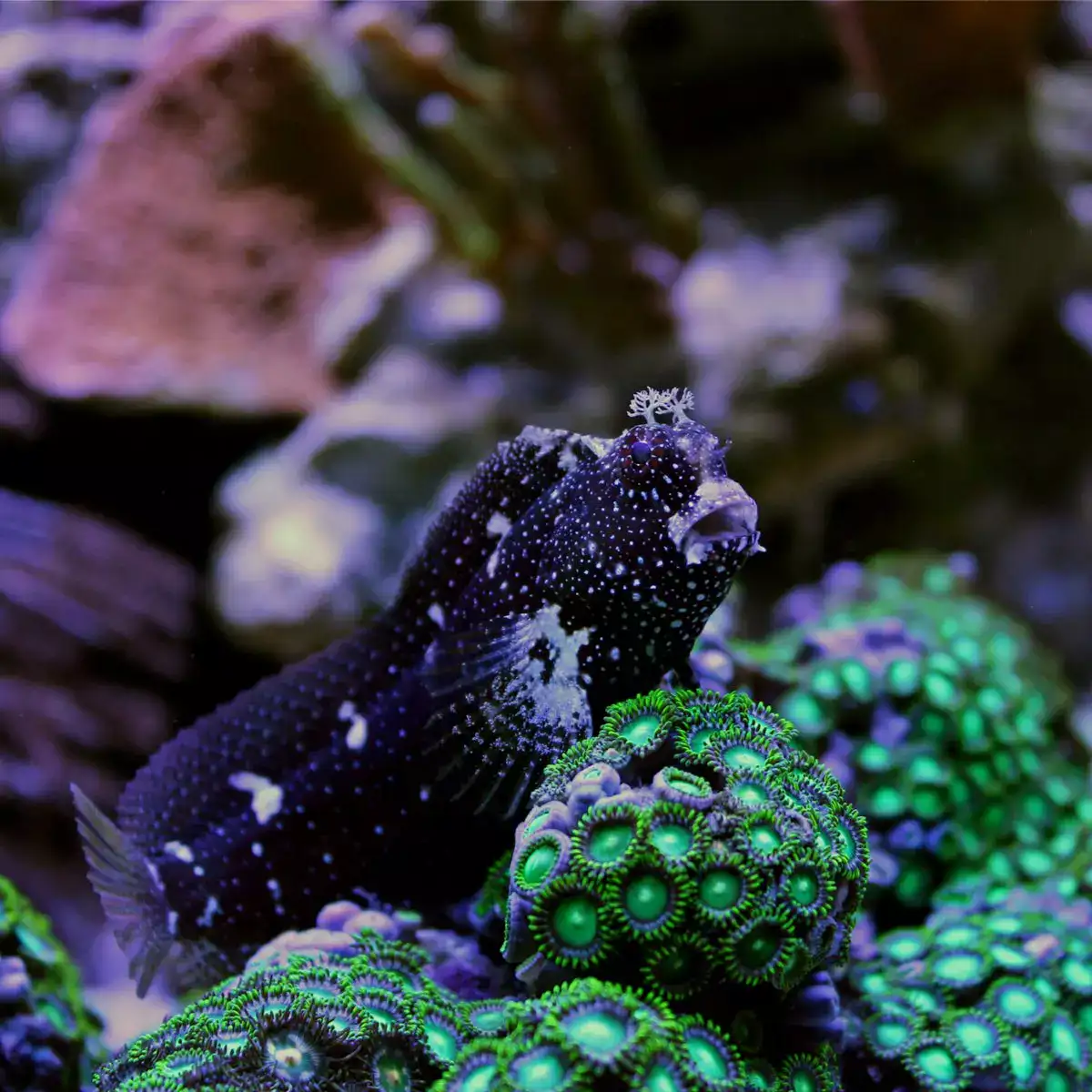
The Scooter Blenny (Synchiropus ocellatus) is a peaceful Pacific dragonet known for its mottled star-like patterning, large pectoral fins, and entertaining habit of scooting across sand, rubble, and rockwork. Best suited for mature marine aquariums, this species thrives with abundant live rock, established microfauna, peaceful tankmates, and frequent access to appropriately sized meaty foods.


- Description
- Additional Information
- Reviews
Scooter Blenny – Synchiropus ocellatus Care Guide
The Scooter Blenny (Synchiropus ocellatus) is a small, peaceful reef fish known for its intricate star-like markings and distinctive habit of moving across the aquarium bottom in short hops and glides. Despite its familiar aquarium-trade name, this species is actually a dragonet rather than a true blenny.
Also known as the Ocellated Dragonet, Synchiropus ocellatus naturally inhabits shallow Pacific reef environments with sand, coral rubble, algal turf, and rocky structure. Its subtle camouflage and constant searching behavior make it especially interesting to observe in a mature reef aquarium.
Scooter Blenny Appearance
Synchiropus ocellatus has an elongated, bottom-oriented body covered with intricate mottled and star-like markings.
Its coloration commonly includes brown, tan, cream, reddish, and darker contrasting tones that help it blend into sand, rubble, and algae-covered reef surfaces.
Large pectoral fins give the fish a broad stance when resting on the substrate, while the patterned dorsal fins become especially noticeable during movement and display.
Exact coloration and pattern intensity can vary naturally with sex, maturity, geographic origin, condition, and aquarium lighting.
Male and Female Differences
Mature males can be distinguished by their more prominent and elaborate dorsal-fin development.
Male Scooter Blennies may raise the first dorsal fin during displays, creating a dramatic silhouette above the body.
Females generally have a less exaggerated dorsal profile and are usually more understated in appearance.
Behavior and Temperament
The Scooter Blenny is generally considered peaceful and is best housed with calm marine community fish.
It spends most of its time close to the substrate, moving among sand, rubble, live rock, and algal surfaces while searching for small prey.
In nature, individuals may occur in small loose groups in sheltered rocky reef habitats.
Because of its deliberate feeding style, aggressive or extremely fast-feeding tankmates may prevent it from obtaining enough food.
Natural Habitat and Distribution
Synchiropus ocellatus has a broad Pacific Ocean distribution extending from Indonesia eastward to the Pitcairn Group, north to Japan, and south to Australia.
The species inhabits sandy areas of lagoons and seaward reefs, sheltered rocky habitats, coral rubble, algal turf, and occasionally tide pools.
It has been recorded from approximately 1 to 30 meters deep.
Scooter Blenny Aquarium Setup
A mature aquarium of approximately 30 gallons or larger is recommended for a single Scooter Blenny.
Provide substantial live rock, reef rubble, open sand, and multiple sheltered areas where the fish can forage naturally throughout the day.
A well-established aquarium with a healthy population of copepods and other small benthic organisms is strongly preferred.
Stable water quality and peaceful tankmates are particularly important because this species feeds slowly and continuously.
Scooter Blenny Diet and Feeding
The Scooter Blenny is primarily a microcarnivore that naturally feeds on small benthic invertebrates.
Recommended foods include:
- Live copepods
- Frozen copepods
- Calanus
- Enriched brine shrimp
- Small mysis shrimp
- Finely chopped marine foods
- Small frozen zooplankton blends
- Very small sinking marine pellets once accepted
A mature reef aquarium with established microfauna provides valuable supplemental feeding opportunities throughout the day.
Target feeding can be useful in community tanks so the dragonet receives enough food before faster fish consume it.
Does the Scooter Blenny Need Copepods?
A healthy copepod population is highly beneficial, particularly when a Scooter Blenny is first introduced.
Some individuals adapt readily to frozen or prepared foods, while others continue to rely heavily on naturally occurring microfauna.
Maintaining a mature aquarium and monitoring body condition are important parts of long-term care.
Is the Scooter Blenny Reef Safe?
The Scooter Blenny is generally considered reef safe.
Its feeding behavior centers on small benthic invertebrates and microcrustaceans rather than coral tissue.
It can be maintained with corals and most compatible reef invertebrates in a mature system.
Suitable Tankmates for the Scooter Blenny
Suitable tankmates may include:
- Clownfish
- Gobies
- Firefish
- Cardinalfish
- Small peaceful wrasses
- Chromis
- Small anthias
- Other peaceful community reef fish
Avoid aggressive species and highly competitive feeders that may intimidate the Scooter Blenny or prevent it from obtaining adequate food.
Scooter Blenny Care Facts
- Care Level: Moderate
- Temperament: Peaceful
- Diet: Carnivore / Microinvertebrate Feeder
- Reef Compatible: Yes
- Minimum Tank Size: Approximately 30 gallons
- Maximum Size: Approximately 3.5 inches
- Natural Range: Pacific Ocean
- Natural Depth: Approximately 1–30 meters
- Natural Habitat: Sandy reefs, rubble, rocky areas, algal turf, and sheltered reef habitats
- Family: Callionymidae
- Scientific Name: Synchiropus ocellatus
- Common Names: Scooter Blenny, Ocellated Dragonet, Scooter Dragonet
Recommended Water Parameters
- Temperature: 74–80°F
- Specific Gravity: 1.020–1.025
- pH: 8.1–8.4
- Alkalinity: 8–12 dKH
Why Choose a Scooter Blenny?
The Scooter Blenny combines intricate natural camouflage, peaceful behavior, and an entertaining bottom-oriented swimming style that makes it very different from typical open-water marine fish.
Its habit of methodically searching rock, rubble, and substrate for tiny prey provides constant natural activity in a mature reef aquarium.
For aquarists with established live rock, healthy microfauna, and peaceful tankmates, Synchiropus ocellatus can make an engaging addition.
Frequently Asked Questions About the Scooter Blenny
What is the scientific name of the Scooter Blenny?
The accepted scientific name is Synchiropus ocellatus.
Is the Scooter Blenny actually a blenny?
No. Despite its aquarium-trade name, the Scooter Blenny is a dragonet belonging to the family Callionymidae.
How large does a Scooter Blenny get?
Synchiropus ocellatus reaches approximately 3.5 inches in total length.
Where is the Scooter Blenny found naturally?
The species occurs across a broad portion of the Pacific Ocean, from Indonesia east to the Pitcairn Group, north to Japan, and south to Australia.
What does the Scooter Blenny eat?
It naturally feeds on small benthic invertebrates and should be offered copepods, Calanus, enriched brine shrimp, small mysis shrimp, and other appropriately sized meaty foods.
Does the Scooter Blenny need copepods?
Copepods are highly beneficial and can provide an important natural food source. Some specimens also learn to accept frozen and prepared foods.
What size aquarium does a Scooter Blenny need?
A mature aquarium of approximately 30 gallons or larger is recommended, with abundant live rock, rubble, and established microfauna.
Is the Scooter Blenny reef safe?
Yes. It is generally considered reef safe and can be maintained with corals and compatible reef invertebrates.
Why does the Scooter Blenny move along the bottom?
This is normal dragonet behavior. The fish naturally spends much of its time close to sand, rubble, and reef surfaces while searching for tiny benthic prey.

Reviews
There are no reviews yet.