



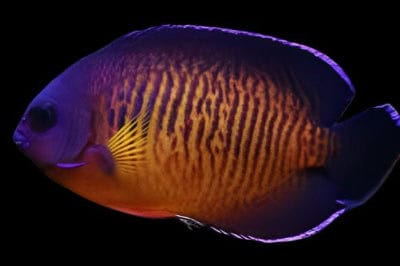

Coral Beauty Angelfish Centropyge bispinosus
Notify Me When In Stock
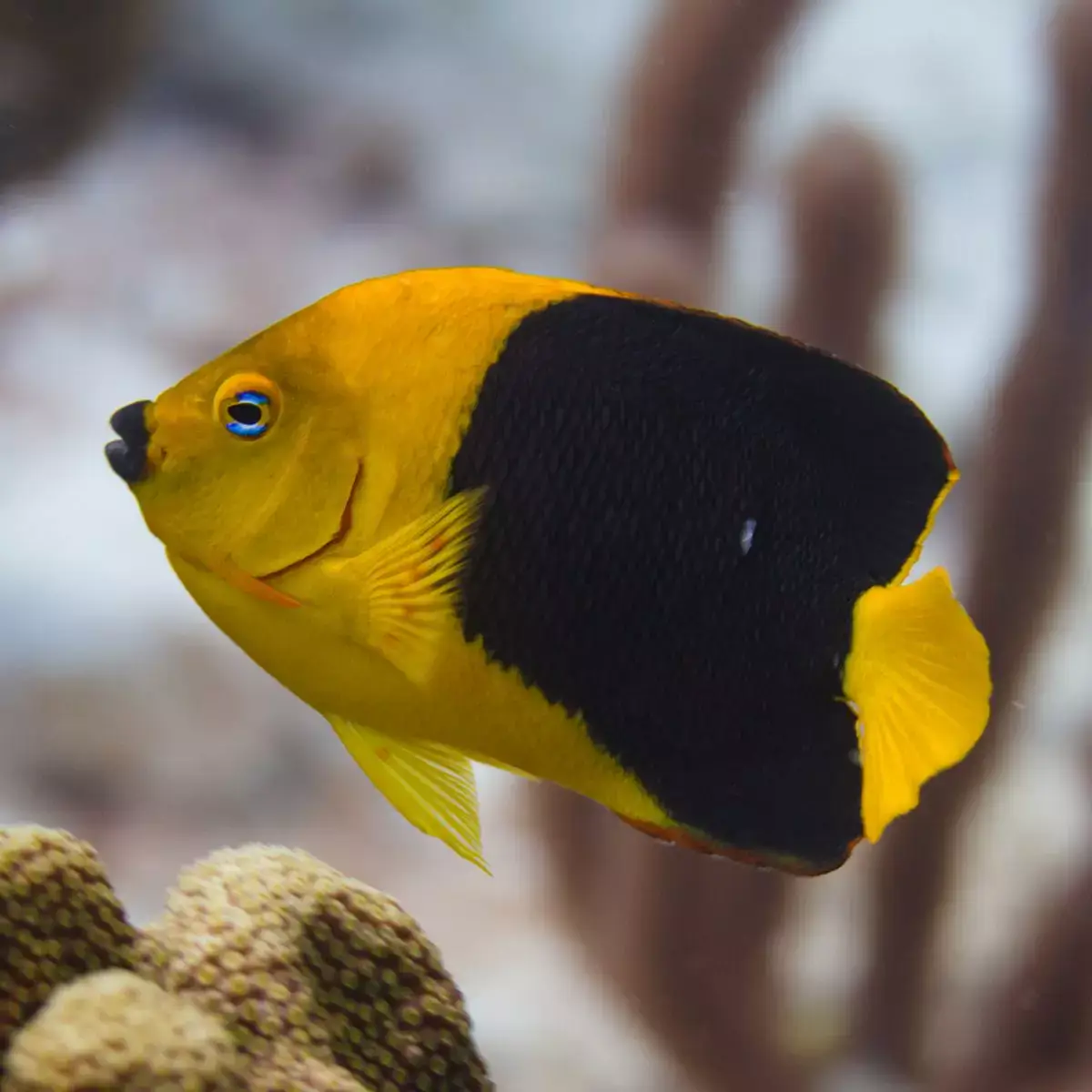
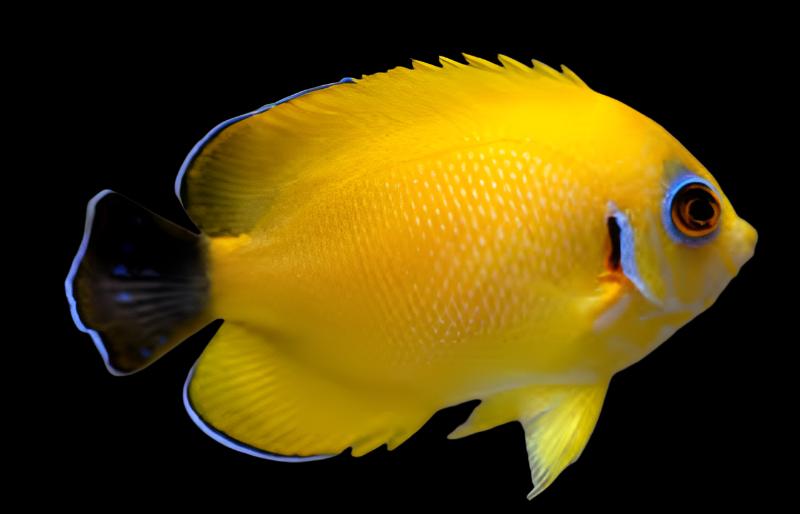


- Description
- Additional Information
- Reviews
Coral Beauty Angelfish – Centropyge bispinosa Care Guide
The Coral Beauty Angelfish (Centropyge bispinosa) is one of the most recognizable dwarf marine angelfish, prized for its deep royal-blue to purple coloration, vivid orange to reddish body markings, and bright blue accents along the fins. Also known as the Twospined Angelfish, this compact species brings intense color and constant movement to an established saltwater aquarium.
Coloration can vary noticeably between individual Coral Beauty Angelfish. Some specimens display rich orange across much of the body, while others show deeper purple or blue tones with narrow orange vertical bars. This natural variation gives each fish a slightly different appearance.
Browse additional saltwater angelfish to compare species, sizes, coloration, and aquarium requirements.
Coral Beauty Angelfish Coloration and Appearance
The Coral Beauty Angelfish typically has a deep blue to purple head and outer body with an orange, red, or golden center. Dark vertical lines often run across the warmer-colored portion of the body, creating a striped pattern that contrasts strongly with the blue fins.
Bright electric-blue edging along the dorsal, anal, and caudal fins adds additional detail. Color intensity and pattern can vary by individual and geographic origin, with some Coral Beauty Angelfish appearing predominantly orange while others show much deeper purple coloration.
Coral Beauty Angelfish Behavior and Temperament
The Coral Beauty Angelfish is considered semi-aggressive. Newly introduced fish may remain close to rockwork for a short period, but established specimens usually become active swimmers that spend much of the day grazing and exploring the aquarium.
Once established, a Coral Beauty may become territorial toward other dwarf angelfish or fish with a similar body shape. Substantial rockwork and visual barriers help provide individual territories and reduce aggression.
Keeping a single Coral Beauty Angelfish is generally the easiest approach. Multiple dwarf angelfish should only be considered when aquarium size, aquascaping, and individual temperaments allow adequate separation.
Natural Habitat and Distribution
Centropyge bispinosa has a broad Indo-Pacific distribution and naturally inhabits coral-rich lagoons and seaward reef slopes. These environments provide extensive rockwork, algae growth, and sheltered areas for feeding and protection.
In the aquarium, mature live rock helps recreate this environment by providing caves, crevices, grazing surfaces, and natural food sources throughout the day.
Coral Beauty Angelfish Aquarium Setup
A mature aquarium of at least 70 gallons is recommended for a Coral Beauty Angelfish. Although this species remains relatively small, reaching around 4 to 4.5 inches, adequate territory and rockwork are important for reducing stress and territorial behavior.
Provide abundant live rock with caves, arches, overhangs, and narrow retreat areas. Open swimming space should also remain available through the front and middle portions of the aquarium.
Strong biological filtration, stable salinity, and consistent water quality help support long-term health. A well-established aquarium with mature algae growth is particularly beneficial for this active grazing species.
Coral Beauty Angelfish Diet and Feeding
The Coral Beauty Angelfish is an omnivore with a strong tendency to graze on algae throughout the day. A varied diet containing both plant-based foods and marine proteins helps maintain strong coloration, healthy body condition, and active behavior.
Recommended foods include:
- Spirulina and marine algae preparations
- Marine algae sheets
- Mysis shrimp
- Enriched brine shrimp
- High-quality dwarf angelfish preparations
- Frozen marine omnivore blends
- Finely chopped marine seafood
- High-quality marine pellets and flakes
Feed two to three smaller meals throughout the day when possible. Mature live rock also provides valuable natural grazing opportunities between scheduled feedings.
Is the Coral Beauty Angelfish Reef Safe?
The Coral Beauty Angelfish is generally considered reef compatible with caution. Many specimens coexist successfully in reef aquariums, while others may nip at soft corals, stony corals, clam mantles, and other sessile invertebrates.
Individual behavior varies considerably. Keeping the fish well fed and providing abundant live rock for grazing may help reduce unwanted picking, but coral safety cannot be guaranteed.
Fish-only and fish-only-with-live-rock aquariums provide the most predictable environment for this species.
Suitable Tankmates for Coral Beauty Angelfish
The Coral Beauty Angelfish can coexist with a wide variety of appropriately sized marine fish. Suitable tankmates may include:
- Clownfish
- Gobies
- Blennies
- Wrasses
- Cardinalfish
- Hawkfish
- Tangs in appropriately sized aquariums
- Other peaceful to moderately assertive marine fish
Use caution when combining multiple dwarf angelfish. Members of the Centropyge genus may become territorial toward one another, especially when aquarium space or hiding areas are limited.
Coral Beauty Angelfish Care Facts
- Care Level: Easy to Moderate
- Temperament: Semi-Aggressive
- Diet: Omnivore
- Reef Compatible: With Caution
- Minimum Tank Size: 70 gallons
- Maximum Size: Approximately 4–4.5 inches
- Natural Range: Indo-Pacific
- Family: Pomacanthidae
- Scientific Name: Centropyge bispinosa
- Common Names: Coral Beauty Angelfish, Coral Beauty, Twospined Angelfish
Recommended Water Parameters
- Temperature: 72–78°F
- Specific Gravity: 1.020–1.025
- pH: 8.1–8.4
- Alkalinity: 8–12 dKH
Approximate Purchase Size
- Small: 1"–2"
- Medium: 2"–3"
- Large: 3"–4"
Actual purchase size, coloration, and markings may vary between individual specimens.
Why Choose a Coral Beauty Angelfish?
The Coral Beauty Angelfish combines intense coloration with the manageable adult size of a dwarf angelfish. Its combination of purple, royal blue, orange, and red can create a strong focal point without requiring the extremely large aquarium needed for many full-size marine angelfish.
Its active grazing behavior also adds movement throughout the rockwork. For aquarists looking for a colorful dwarf angelfish with an established reputation in the marine aquarium hobby, Centropyge bispinosa is a popular choice.
Explore more angelfish for saltwater aquariums to compare additional species, colors, sizes, and care requirements.
Frequently Asked Questions About Coral Beauty Angelfish
How large does a Coral Beauty Angelfish get?
The Coral Beauty Angelfish typically reaches approximately 4 to 4.5 inches in total length. Its compact size makes it considerably smaller than many large marine angelfish.
What size aquarium does a Coral Beauty Angelfish need?
A mature aquarium of approximately 70 gallons or larger is recommended. Adequate rockwork and territory are just as important as total aquarium volume.
Is the Coral Beauty Angelfish reef safe?
The Coral Beauty Angelfish is considered reef compatible with caution. Some individuals coexist well with corals, while others may nip at soft corals, stony corals, and clam mantles.
What should I feed a Coral Beauty Angelfish?
Offer a varied diet containing Spirulina, marine algae, mysis shrimp, enriched brine shrimp, marine proteins, and high-quality dwarf angelfish preparations. Natural grazing on mature live rock is also beneficial.
Is the Coral Beauty Angelfish aggressive?
The Coral Beauty Angelfish is semi-aggressive and may become territorial toward other dwarf angelfish or similarly shaped fish after becoming established.
What colors does a Coral Beauty Angelfish have?
Coloration varies between specimens, but most display a mixture of deep royal blue or purple with orange, red, or yellow areas across the center of the body and bright blue edging along the fins.
Where does the Coral Beauty Angelfish come from?
The Coral Beauty Angelfish occurs throughout a broad portion of the Indo-Pacific, where it inhabits coral-rich lagoons and reef slopes.

Reviews
There are no reviews yet.