



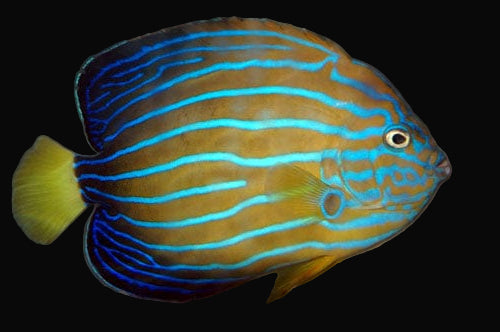

Blueline Angelfish - Chaetodontoplus septentrionalis
Notify Me When In Stock



- Description
- Additional Information
- Reviews
Blueline Angelfish – Chaetodontoplus septentrionalis Care Guide
The Blueline Angelfish (Chaetodontoplus septentrionalis) is a distinctive marine angelfish prized for its brilliant electric-blue striping, golden to tan body coloration, and bright yellow tail. Also known as the Blue-Striped Angelfish or Bluebanded Angelfish, this species develops a striking pattern that makes it an impressive centerpiece for a large saltwater aquarium.
Blueline Angelfish are naturally associated with rocky and coral reef environments and spend much of their time exploring caves, grazing surfaces, and sheltered areas. Their combination of bold coloration and deliberate swimming behavior gives them a strong visual presence without the massive adult size reached by some other large marine angelfish.
Browse more saltwater angelfish for additional species, sizes, and aquarium options.
Blueline Angelfish Coloration and Appearance
Adult Blueline Angelfish display a yellow to tan or golden-brown body crossed by numerous bright electric-blue horizontal stripes. These blue lines extend across the body and into portions of the fins, producing an intricate striped appearance.
The dorsal and anal fins become darker toward the rear of the fish and are accented by blue markings, while the caudal fin is bright yellow. The contrast between the warm body coloration and vivid blue striping makes this species especially striking under aquarium lighting.
Juvenile Blueline Angelfish Appearance
Juvenile Blueline Angelfish differ noticeably from mature specimens. Young fish have a darker body with iridescent blue horizontal lines, a yellow vertical marking behind the eye, and a bright yellow tail.
As the fish grows, the body gradually becomes lighter and develops the golden or tan coloration associated with adults. The blue striping becomes increasingly prominent, creating a dramatic transition from juvenile to adult coloration.
Blueline Angelfish Behavior and Temperament
The Blueline Angelfish is considered semi-aggressive, although newly introduced specimens may initially appear shy. They often spend their first days close to rockwork and caves before becoming more comfortable swimming throughout the aquarium.
Provide plenty of hiding places and avoid overly aggressive tankmates during acclimation. Once established, the Blueline Angelfish can become territorial, particularly toward other angelfish or fish with a similar body shape.
A single specimen is generally easiest to maintain unless the aquarium is exceptionally large and provides multiple established territories.
Natural Habitat and Aquarium Setup
Chaetodontoplus septentrionalis naturally inhabits coastal rocky reefs and coral reef environments of the western Pacific. The species is commonly associated with complex reef structures where caves and rocky formations provide shelter and feeding opportunities.
A mature aquarium of at least 180 gallons is recommended for a Blueline Angelfish. Provide substantial live rock with caves, overhangs, crevices, and shaded areas while maintaining open swimming room.
Mature live rock is especially valuable because it provides natural grazing surfaces and helps replicate the environment this species explores throughout the day.
Blueline Angelfish Diet and Feeding
The Blueline Angelfish is an omnivore with a natural diet that includes sponges and tunicates. A varied aquarium diet is important for maintaining healthy body condition, coloration, and long-term health.
Recommended foods include:
- Sponge-based marine angelfish preparations
- Marine algae and Spirulina
- Mysis shrimp
- Finely chopped or shaved marine shrimp
- Clam and other marine seafood
- Frozen omnivore blends
- High-quality marine pellets
- Natural grazing from mature live rock
Feed two to three smaller meals per day when possible. Providing both plant-based foods and marine proteins helps create a balanced diet for this active angelfish.
Is the Blueline Angelfish Reef Safe?
The Blueline Angelfish is generally considered reef compatible with caution. It may nip at soft corals, stony corals, clam mantles, sponges, and other sessile invertebrates.
Individual behavior varies, but reef keepers should be prepared for potential coral picking as the fish matures. Fish-only and fish-only-with-live-rock aquariums offer the most predictable environment.
Suitable Tankmates for Blueline Angelfish
The Blueline Angelfish does best with peaceful to moderately assertive marine fish that will not continuously harass it. Suitable tankmates may include:
- Tangs and surgeonfish
- Rabbitfish
- Larger wrasses
- Clownfish
- Hawkfish
- Cardinalfish
- Other medium to large community marine fish
Avoid combining the Blueline Angelfish with excessively aggressive fish, particularly during initial acclimation. Other large angelfish should only be considered in very large aquariums with extensive rockwork and separate territories.
Blueline Angelfish Care Facts
- Care Level: Difficult
- Temperament: Semi-Aggressive
- Diet: Omnivore
- Reef Compatible: With Caution
- Minimum Tank Size: 180 gallons
- Maximum Size: Approximately 8–9 inches
- Natural Range: Western Pacific
- Family: Pomacanthidae
- Scientific Name: Chaetodontoplus septentrionalis
- Common Names: Blueline Angelfish, Blue-Striped Angelfish, Bluebanded Angelfish
Recommended Water Parameters
- Temperature: 72–78°F
- Specific Gravity: 1.020–1.025
- pH: 8.1–8.4
- Alkalinity: 8–12 dKH
Approximate Purchase Size
- Juvenile Small: 1"–2"
- Juvenile Medium: 2"–2.75"
- Changing Small: 1.5"–2.25"
- Changing Small/Medium: 2.25"–3.5"
- Adult Medium: 3.5"–5"
- Adult Large: 5"–7"
Actual purchase size, coloration, and pattern may vary between individual specimens.
Why Choose a Blueline Angelfish?
The Blueline Angelfish offers a combination of detailed coloration, substantial size, and a distinctive appearance not commonly seen among marine angelfish. Its electric-blue stripes and bright yellow tail create strong contrast against live rock and darker aquarium backgrounds.
This species is especially appealing for experienced aquarists looking for a less common centerpiece fish for a large, mature marine aquarium. Browse additional angelfish for saltwater aquariums to compare species and care requirements.
Frequently Asked Questions About Blueline Angelfish
How large does a Blueline Angelfish get?
The Blueline Angelfish can reach approximately 8 to 9 inches in total length. Its active swimming behavior and territorial needs make a large aquarium important despite its more moderate adult size compared with some other marine angelfish.
What size aquarium does a Blueline Angelfish need?
A minimum aquarium size of approximately 180 gallons is recommended. A larger system provides additional swimming space, grazing surfaces, and hiding areas.
Is the Blueline Angelfish reef safe?
Not reliably. Blueline Angelfish may nip at soft corals, stony corals, clam mantles, sponges, and other sessile invertebrates, so they are best considered reef compatible with caution.
What should I feed a Blueline Angelfish?
Offer a varied diet containing sponge-based angelfish foods, marine algae, Spirulina, mysis shrimp, chopped marine seafood, clam, and high-quality prepared marine foods.
Is the Blueline Angelfish aggressive?
The Blueline Angelfish is semi-aggressive but may initially be shy when introduced. Once established, it can become territorial toward other angelfish and similarly shaped fish.
What does an adult Blueline Angelfish look like?
Adults develop a yellow to golden-tan body covered with vivid horizontal electric-blue stripes and a bright yellow tail. Juveniles are darker and gradually transition into the lighter adult coloration as they grow.
Where does the Blueline Angelfish come from?
The Blueline Angelfish occurs naturally in the western Pacific, where it inhabits coastal rocky and coral reef environments.

Reviews
There are no reviews yet.