



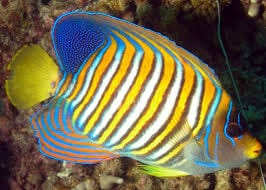
Regal Angelfish Fiji Pygoplites diacanthus
Price range: $150.73 through $157.48
Price range: $96.73 through $105.73
Price range: $164.23 through $177.73
Price range: $110.23 through $125.98


- Description
- Additional Information
- Reviews
Regal Angelfish Fiji Profile and Reef Behavior
The Fiji Regal Angelfish brings a slightly deeper tone to the classic Regal pattern. Its body leans toward a richer blue-gray chest, which contrasts with the bright orange-and-white striping. Under reef lighting, the colors shift subtly, giving the fish a layered, almost iridescent look as it moves.
When first introduced, this variant tends to stay tucked into rockwork. It observes its surroundings before becoming more active. With time and consistent feeding, it grows more confident and begins to move through open areas of the aquarium.
Regal Angelfish Fiji Variant Color and Visual Profile
This origin is known for a slightly darker overall tone compared to other grey-belly variants.
- Deeper blue-gray chest coloration
- Strong orange and white vertical striping
- Yellow tail with blue highlights along the fins
- Color contrast becomes more pronounced with age
It offers a bold but natural reef appearance that works well in larger displays.
Behavior and Tank Presence
The Fiji Regal Angelfish behaves cautiously at first but adjusts over time.
- Prefers calm, low-aggression environments
- Uses rockwork for shelter and grazing
- Becomes more visible once feeding is consistent
- May show mild territorial behavior toward similar fish
A peaceful tank setup allows this fish to settle more quickly.
Feeding and Diet Approach
Feeding success is critical for long-term care. This species benefits from variety and routine.
- Accepts mysis shrimp, brine shrimp, and chopped seafood
- Requires sponge-based angelfish preparations
- Grazes naturally on mature live rock
- Needs multiple small feedings daily
Offering food near rock surfaces can improve feeding response.
Reef Compatibility
This species is considered reef safe with caution. Some individuals ignore corals, while others may nip at LPS, soft corals, or clam mantles.
Keeping the fish well-fed helps reduce this behavior, but results vary.
Tank Setup Requirements
A mature and stable aquarium provides the best conditions.
- Minimum tank size: 125 gallons
- Established live rock with caves and structure
- Stable salinity and pH
- Balanced open space and hiding areas
Avoid introducing this fish into newly set up systems.
Care Stats and Facts
- Care Level: Moderate to High
- Temperament: Docile to Semi-Aggressive
- Diet: Omnivore (sponge-based diet required)
- Reef Compatible: With Caution
- Water Temperature: 72–82°F
- Specific Gravity: 1.020–1.025
- pH Range: 8.1–8.4
- Max Size: Up to 10 inches
- Family: Pomacanthidae
- Scientific Name: Pygoplites diacanthus
- Minimum Tank Size: 125 gallons
Approximate Purchase Sizes
- Small: 2" – 3"
- Small Medium: 3" – 4"
- Medium: 4" – 5"
- Medium Large: 5" – 6"
- Large: 6" – 7"+
Reviews
There are no reviews yet.