




Interruptus Angelfish Japan Centropyge interruptus
Notify Me When In Stock


- Description
- Reviews
Interruptus Angelfish – Japan – Centropyge interruptus Care Guide
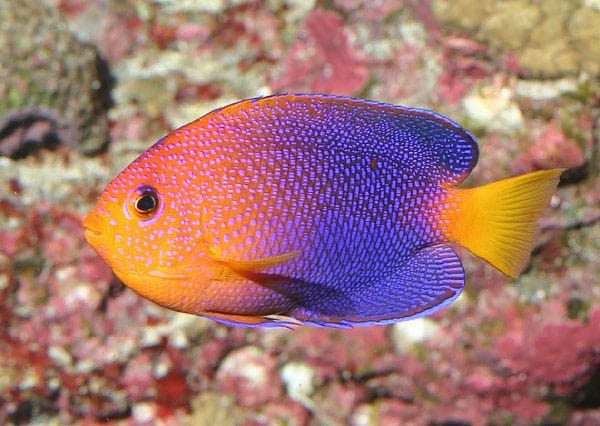
The Interruptus Angelfish (Centropyge interruptus) from Japan is one of the most distinctive and sought-after dwarf marine angelfish in the aquarium hobby. Its brilliant orange-red body is covered with numerous electric-blue spots, while vivid blue fin edging and a contrasting yellow tail create an exceptionally detailed color pattern.
Also known as the Japanese Pygmy Angelfish, this species is naturally associated with subtropical waters around southern Japan and nearby western Pacific islands. Its rarity, striking coloration, and limited natural range make it especially appealing to experienced collectors.
Browse additional saltwater angelfish to compare species, geographic origins, sizes, and aquarium requirements.
Interruptus Angelfish Coloration and Appearance
The Interruptus Angelfish has a vivid orange to reddish body covered with small bright blue spots. These spots become especially prominent along the sides and rear portion of the fish, creating a highly textured appearance.
The dorsal and anal fins carry brilliant electric-blue edging, while the caudal fin is typically bright yellow. Blue markings around the face and gill area add further contrast.
Color intensity can vary between individual specimens, but mature fish are especially striking under balanced reef aquarium lighting.
Interruptus Angelfish Behavior and Temperament
The Interruptus Angelfish is generally considered semi-aggressive. Like many dwarf angelfish, established specimens may defend preferred sections of rockwork from other Centropyge species and similarly shaped fish.
Provide extensive live rock with caves, crevices, overhangs, and visual barriers. A structured aquascape allows the fish to establish a secure territory while providing natural grazing surfaces.
Keeping a single dwarf angelfish is generally the simplest approach unless the aquarium is sufficiently large to support multiple territories.
Natural Habitat and Japan Origin
Centropyge interruptus is native to the northwestern Pacific and is particularly associated with southern Japan, including reef environments around the Izu Islands and neighboring regions.
Unlike many tropical dwarf angelfish, this species naturally occurs in somewhat cooler subtropical waters. It inhabits rocky and coral reef environments with abundant caves and crevices.
Its restricted distribution and relatively remote collection areas contribute to its uncommon availability in the aquarium trade.
Interruptus Angelfish Aquarium Setup
A mature aquarium of approximately 70 gallons or larger is recommended for long-term care. Although the Interruptus Angelfish remains relatively compact, it benefits from ample swimming space, mature live rock, and clearly defined territories.
Provide substantial rockwork with caves, arches, overhangs, and narrow retreat areas. Established surfaces also provide valuable grazing opportunities throughout the day.
Because this species naturally occurs in cooler subtropical waters, maintaining stable temperatures toward the cooler end of the typical marine aquarium range is generally preferable to consistently warm tropical conditions.
Interruptus Angelfish Diet and Feeding
The Interruptus Angelfish is an omnivore and active grazer. A varied diet containing marine algae, quality dwarf angelfish preparations, and small marine proteins helps maintain strong coloration and healthy body condition.
Recommended foods include:
- Spirulina and marine algae preparations
- Marine algae sheets or nori
- High-quality dwarf angelfish preparations
- Mysis shrimp
- Enriched brine shrimp
- Frozen marine omnivore blends
- Finely chopped marine seafood
- High-quality marine pellets and flakes
Feed two to three smaller meals throughout the day when possible. Mature live rock provides additional grazing opportunities between scheduled feedings.
Is the Interruptus Angelfish Reef Safe?
The Interruptus Angelfish is generally considered reef compatible with caution. Some individuals coexist successfully with corals, while others may nip at soft corals, stony corals, clam mantles, and other sessile invertebrates.
Individual behavior varies. Providing a varied diet and abundant grazing surfaces may reduce unwanted picking, but coral safety cannot be guaranteed.
Suitable Tankmates for Interruptus Angelfish
The Interruptus Angelfish can coexist with a variety of peaceful to moderately assertive marine fish when sufficient space is available. Suitable tankmates may include:
- Clownfish
- Gobies
- Blennies
- Cardinalfish
- Fairy and flasher wrasses
- Hawkfish
- Tangs in appropriately sized aquariums
- Other peaceful to moderately assertive marine fish
Use caution with additional dwarf angelfish because territorial aggression can occur once the Interruptus Angelfish becomes established.
Japan Interruptus Angelfish Care Facts
- Care Level: Moderate to Advanced
- Temperament: Semi-Aggressive
- Diet: Omnivore
- Reef Compatible: With Caution
- Minimum Tank Size: 70 gallons
- Maximum Size: Approximately 6 inches
- Collection Origin: Japan
- Natural Range: Northwestern Pacific
- Family: Pomacanthidae
- Scientific Name: Centropyge interruptus
- Common Names: Interruptus Angelfish, Japanese Pygmy Angelfish, Japanese Angelfish
Recommended Water Parameters
- Temperature: 70–76°F
- Specific Gravity: 1.020–1.025
- pH: 8.1–8.4
- Alkalinity: 8–12 dKH
Approximate Purchase Size
- Small: Approximately 1.5"–2.5"
- Medium: Approximately 2.5"–3.5"
- Large: Approximately 3.5"–5"
Actual purchase size, coloration, and spotting may vary between individual specimens.
Why Choose a Japan Interruptus Angelfish?
The Interruptus Angelfish offers a rare combination of intense coloration, compact size, and geographic exclusivity. Its orange-red body, electric-blue spotting, blue fin accents, and yellow tail create a detailed appearance unlike most other dwarf angelfish.
Its limited northwestern Pacific distribution and uncommon availability also make Centropyge interruptus particularly attractive to experienced collectors seeking a distinctive centerpiece fish.
Explore more angelfish for saltwater aquariums to compare additional species, geographic origins, sizes, and care requirements.
Frequently Asked Questions About Interruptus Angelfish
How large does an Interruptus Angelfish get?
The Interruptus Angelfish can reach approximately 6 inches in total length, making it one of the larger dwarf marine angelfish.
What size aquarium does an Interruptus Angelfish need?
A mature aquarium of approximately 70 gallons or larger is recommended, with abundant live rock, caves, and natural grazing surfaces.
Is the Interruptus Angelfish reef safe?
The Interruptus Angelfish is considered reef compatible with caution. Some individuals may coexist successfully with corals, while others may occasionally nip at corals or clam mantles.
What should I feed an Interruptus Angelfish?
Offer a varied diet containing marine algae, Spirulina, quality dwarf angelfish foods, mysis shrimp, enriched brine shrimp, and other high-quality marine preparations.
What does an Interruptus Angelfish look like?
The species typically displays a vivid orange-red body covered with electric-blue spots, blue-edged fins, and a contrasting yellow tail.
Where does the Interruptus Angelfish come from?
Centropyge interruptus is native to the northwestern Pacific and is especially associated with subtropical reef environments around southern Japan.
Does the Interruptus Angelfish prefer cooler water?
Yes. Compared with many tropical dwarf angelfish, this species naturally inhabits cooler subtropical waters. Maintaining stable temperatures toward the cooler end of normal marine aquarium conditions is generally appropriate.
Why is the Interruptus Angelfish so rare?
Its limited natural range, remote collection locations, and relatively low availability in the aquarium trade make it considerably less common than widely distributed dwarf angelfish species.

Reviews
There are no reviews yet.