



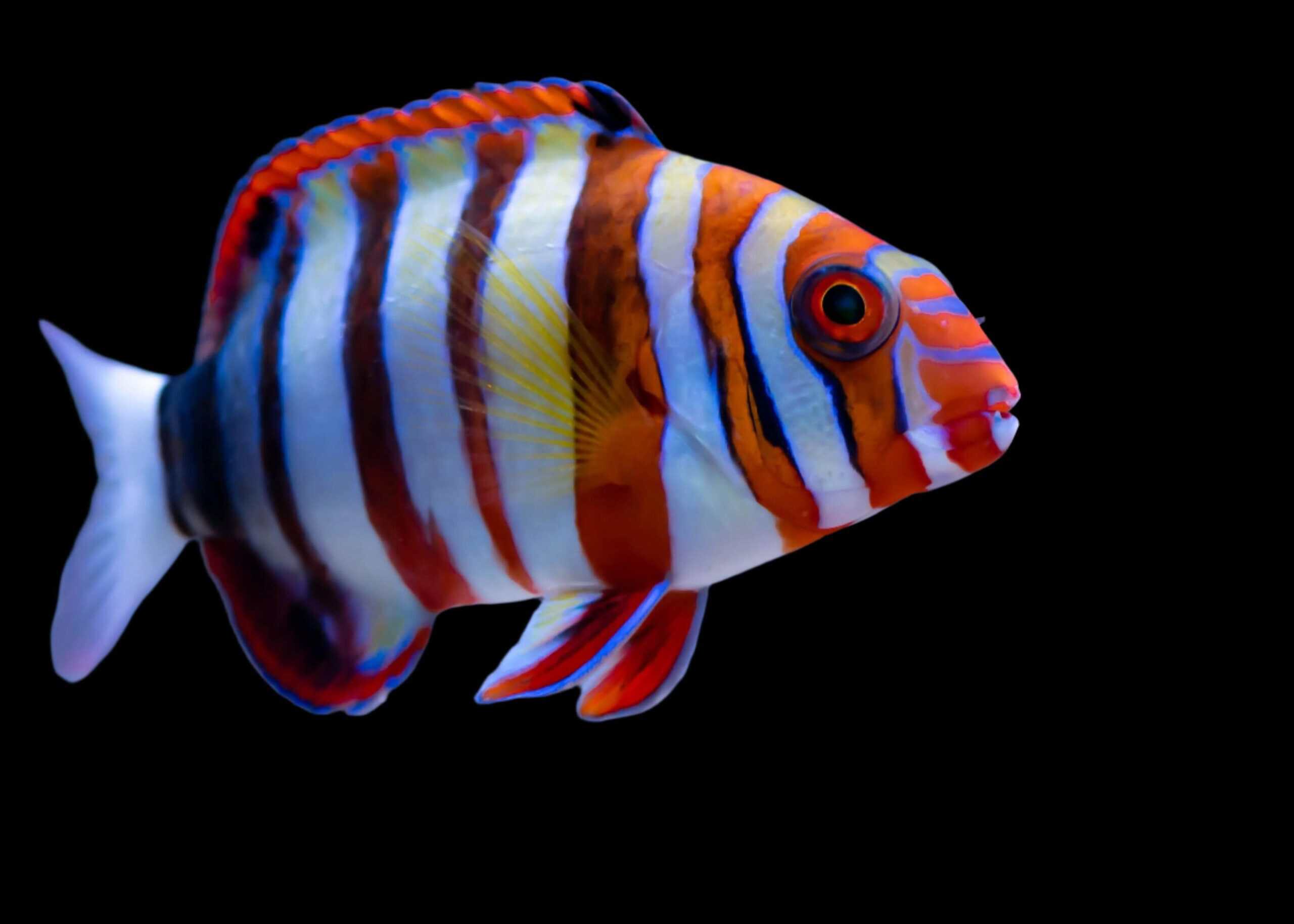
Harlequin Tusk - Lienardella fasciata
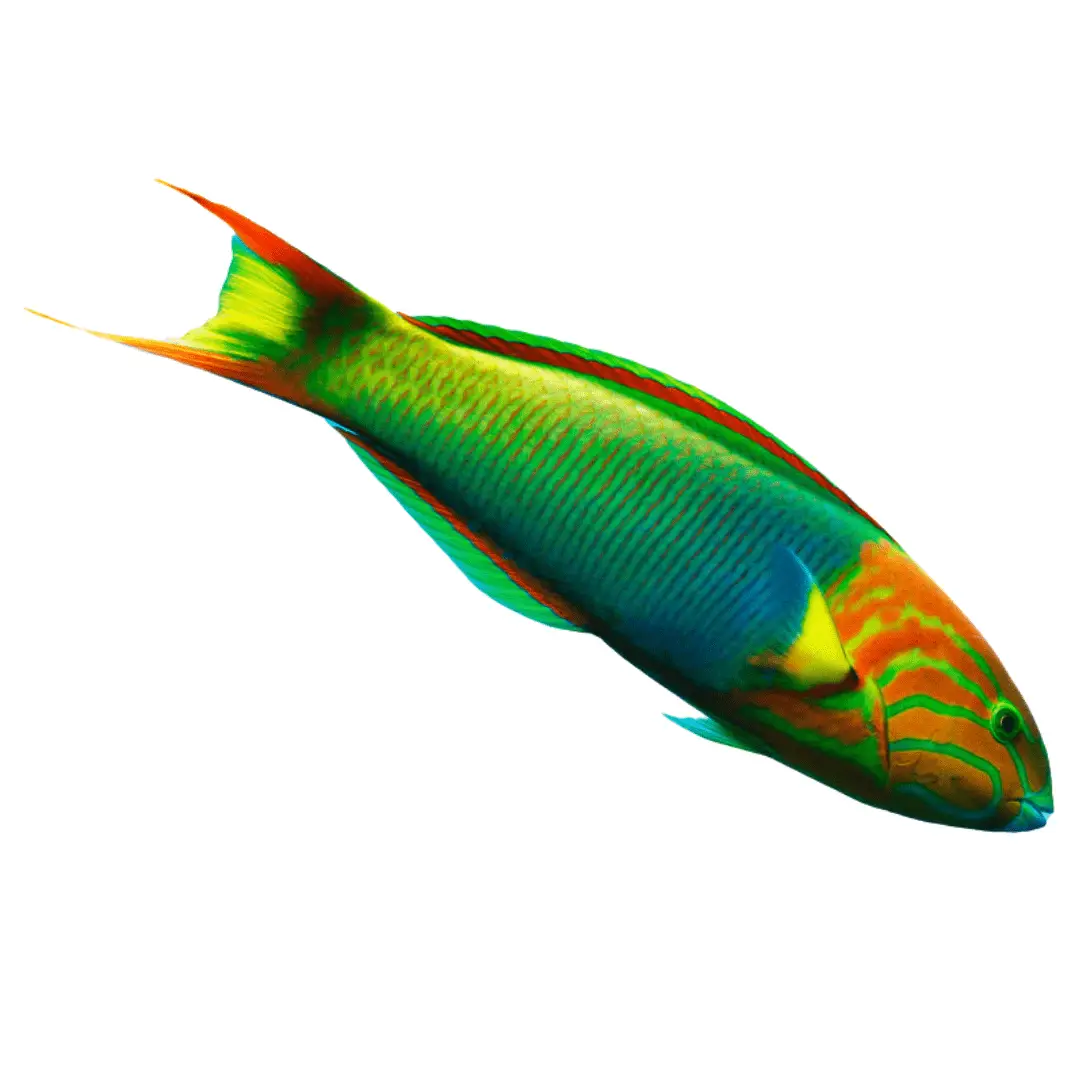

- Description
- Additional Information
- Reviews
Meet the Show-Stopping Harlequin Tusk (Lienardella fasciata)
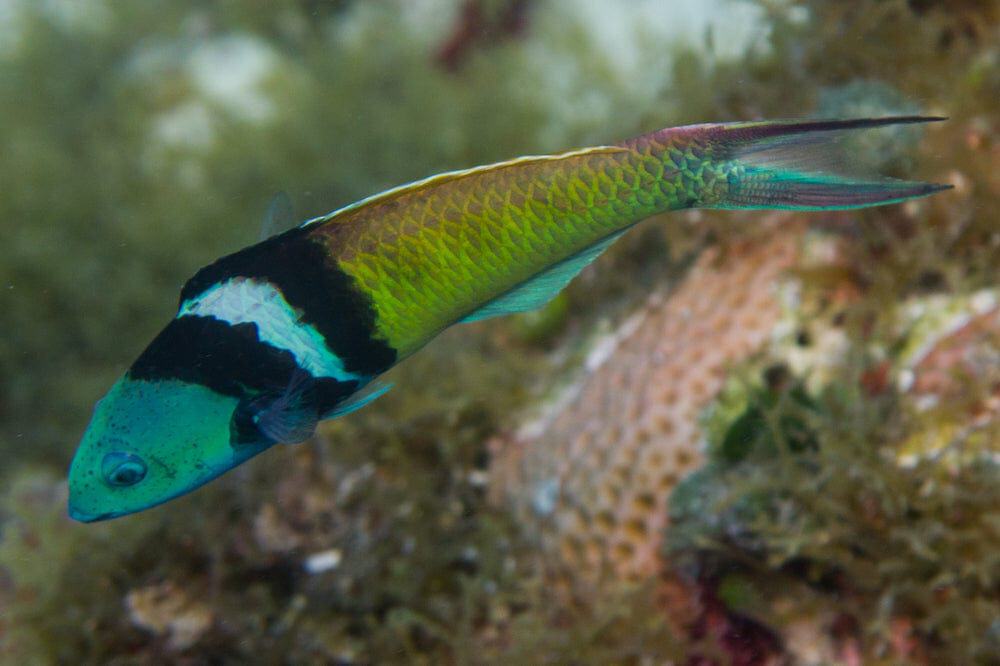
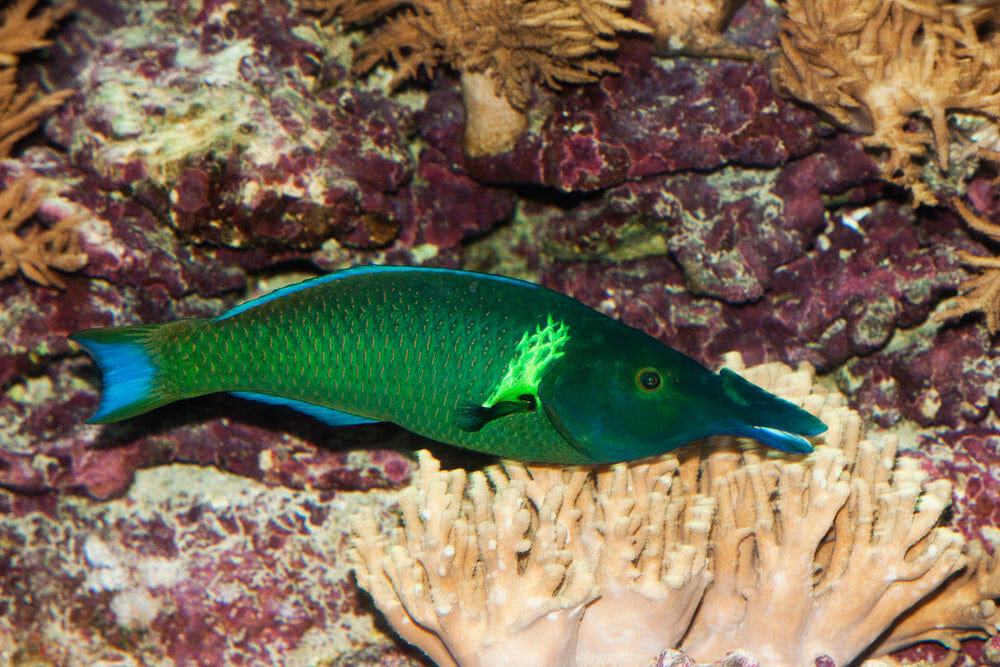
The Harlequin Tusk reigns as one of the most visually stunning members of the wrasse family today. This species hails from the vibrant coral reefs of the Indian Ocean and the pristine waters of Australia. Interestingly, the Australian variety often displays much deeper blue margins along its signature orange stripes. Because they possess bright blue teeth, these fish look almost like aquatic vampires with a colorful twist. Consequently, adding a Harlequin Tusk creates an immediate "wow" factor for any seasoned marine hobbyist.
Designing the Perfect Harlequin Tusk Habitat
To keep your Harlequin Tusk healthy, you must provide a tank of at least 125 gallons. Since these fish love to explore, fill the aquarium with plenty of stable live rock formations. These caves offer essential security while they settle into their new home. Although they start off a bit shy, they quickly become the boldest personalities in the tank. Therefore, ensure you have a tight-fitting lid to keep this active swimmer safely inside.
Compatible Tank Mates and Temperament
-
Select moderately active companions like larger Angels or Tangs.
-
Avoid keeping more than one Harlequin in a single aquarium.
-
Monitor them around small invertebrates like snails and ornamental crabs.
-
Pair them with smaller Triggerfish to create a dynamic, balanced community.
Nutritional Guidelines for Your Harlequin Tusk
Maintaining the electric colors of the Harlequin requires a high-quality, protein-rich diet. Because they are natural predators, they crave meaty textures and varied marine proteins. For the best results, we recommend a consistent feeding schedule of:
-
Vitamin-enriched frozen mysis and brine shrimp.
-
Freshly chopped seafood like clams or table shrimp.
-
Premium marine flakes for daily vitamin intake.
-
Nutrient-dense sinking pellets to ensure full satiation.
Approximate Purchase Sizes
| Size Category | Length in Inches |
| Small | 2.5" to 3.5" |
| Medium | 3.5" to 4.25" |
| Large | 5.0" to 6.0" |
| XX-Large | 7.0" to 9.0" |
Frequently Asked Questions
Is the Harlequin Tusk considered reef-safe? While they rarely bother corals, they will eat small shrimp, crabs, and snails. For this reason, most keepers place them in fish-only systems.
Does the Harlequin Tusk get along with other wrasses? Generally, they coexist well with different wrasse species in large tanks. However, you should avoid adding other Lienardella species to the same environment.
How fast do these fish typically grow? They grow at a moderate pace if you provide clean water and ample food. Eventually, they can reach a maximum size of nearly 10 inches.
Why are my fish’s teeth turning blue? This is a natural physical trait of the species. The blue "tusks" actually become more prominent as the fish matures.
Reviews
There are no reviews yet.