




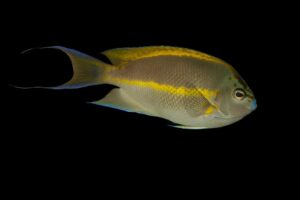
Bellus Angelfish; Male - Genicanthus bellus
Price range: $524.98 through $887.48
Select Variant
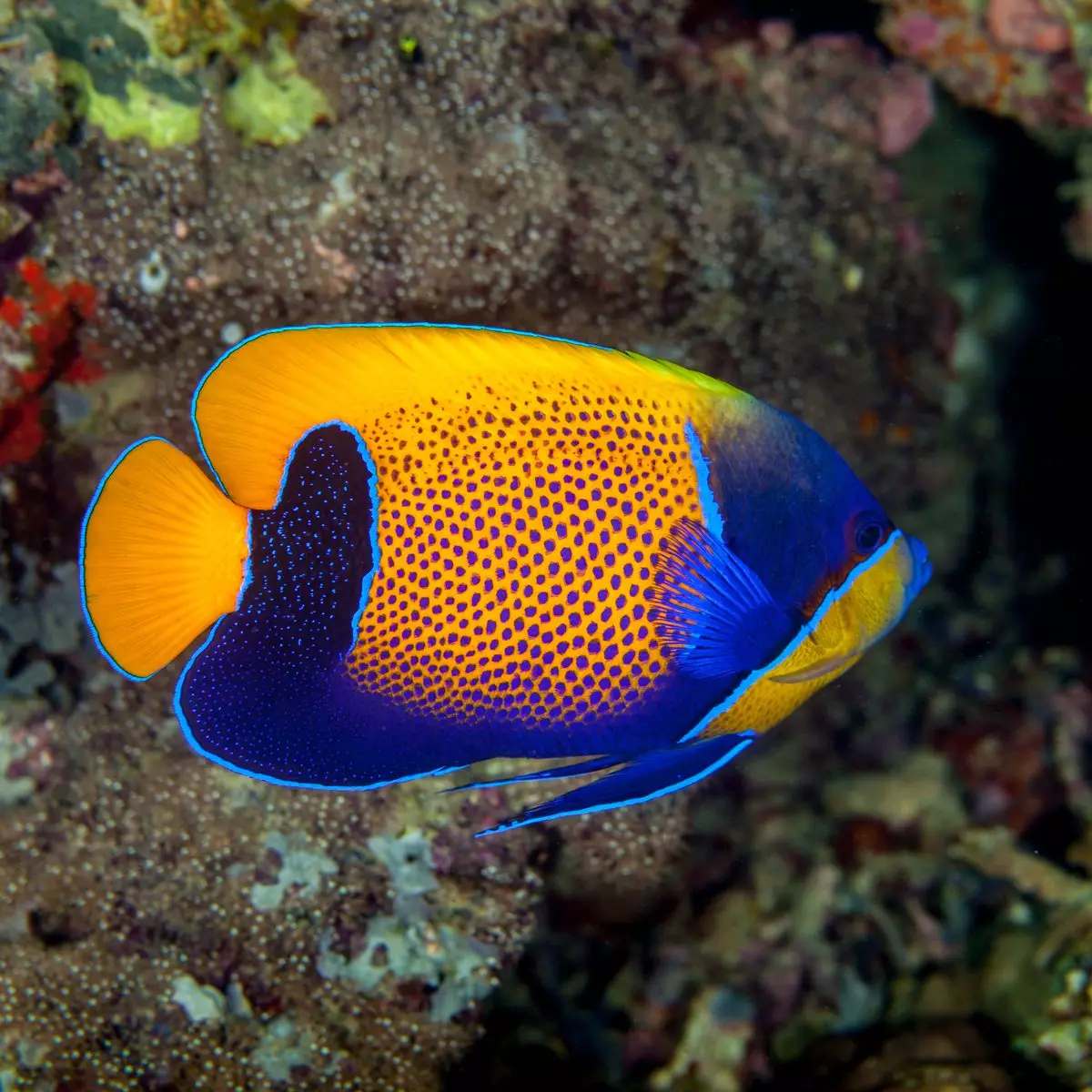
The Bellus Angelfish Male is a rare deepwater gem known for its soft iridescent coloring, distinct striping, and peaceful presence in large aquariums. Perfect for reef enthusiasts seeking a vibrant yet non-aggressive addition, this planktivore adapts beautifully to community tanks with proper space and structure.
Related Products
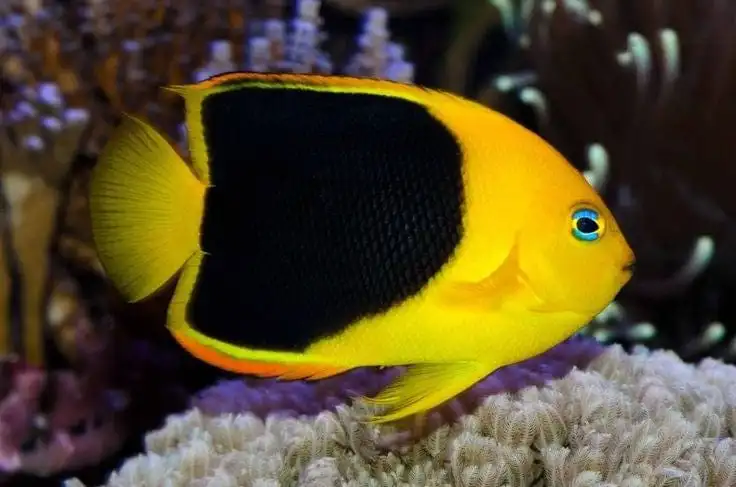
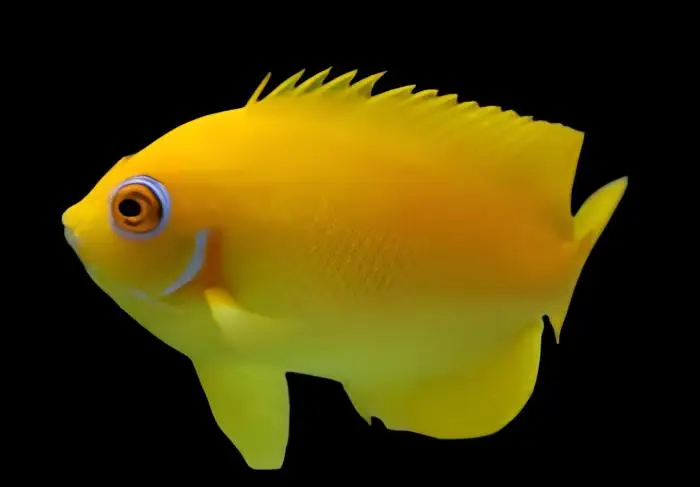
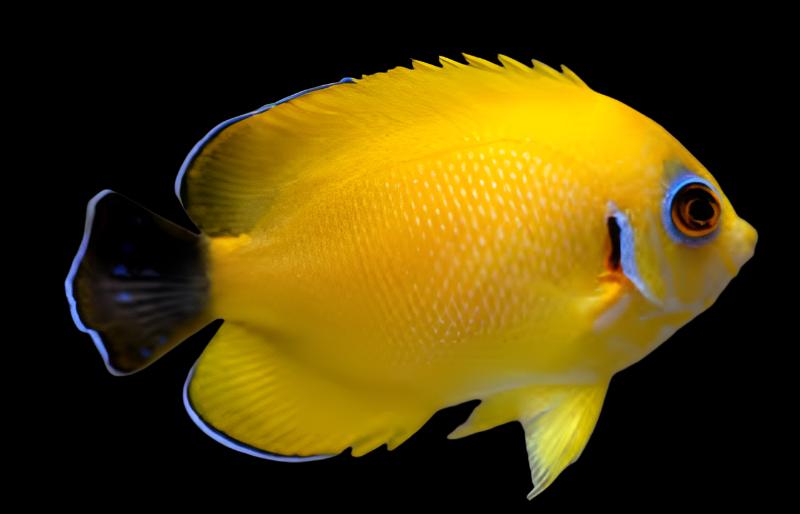
Price range: $114.98 through $222.48
Price range: $167.48 through $219.98
Price range: $92.48 through $194.98

- Description
- Additional Information
- Reviews
Bellus Angelfish - Male - Genicanthus bellus
The Bellus Angelfish, also known as Pomacanthus bellus, is unique for its sexual dimorphism. Males are iridescent pale blue and white with horizontal blue stripes on the lower body and anal fins, along with a yellow to orange stripe extending towards the caudal fin and bordering the dorsal fin. Females are iridescent pale blue-black with a yellow/orange lateral stripe and dorsal fin.Housing Requirements
- Tank Size: Best kept in a 125-gallon or larger aquarium.
- Tank Setup: Ideal for deep-water reef aquariums.
- Lighting: Initially prefer dim lighting but adapt well to bright reef aquarium lights.
- Hiding Places: Provide multiple hiding spots and ample live rock for grazing.
- Group Dynamics: Suitable as a male-female pair or a small harem with one male and several females. Avoid keeping multiple males together due to potential aggression.
Diet and Nutrition
- Diet: Primarily a planktivore, consuming zooplankton, marine algae, bryozoans, polychaetes, and other benthic invertebrates.
- Feeding: Accepts prepared frozen foods such as mysis shrimp, brine shrimp, shellfish, and Spirulina. Ensure a varied diet for optimal health.
Origin and Characteristics
- Native Region: Found in the Eastern Indian and Western Pacific Oceans, including Tahiti, Guam, Palau, Tonga, Cook Islands, Marshall Islands, Okinawa (Japan), South Indonesia, and Cocos-Keeling Atoll.
- Appearance: Males are pale blue and white with blue stripes and a yellow-orange stripe; females are blue-black with yellow/orange accents.
- Breeding: Hermaphroditic, with the ability to change sex from female to male and back if necessary. Breeding in captivity is challenging but possible.
Create a Vibrant Display
- Find more life in our all fish section.
- Compare similar profiles within this angelfish lineup.
- Feed daily nutrients from dry food blends.
- Maintain consistency using reef test kits.
Watch, Comment, Share
- New frags on Instagram Posts
- Shop news on Facebook Feed
- Shortform tips on TikTok Channel
- Expert feedback on Reef2Reef
Size
S | SM | M | ML | L | XL | XX | SH | J
Reviews
There are no reviews yet.