


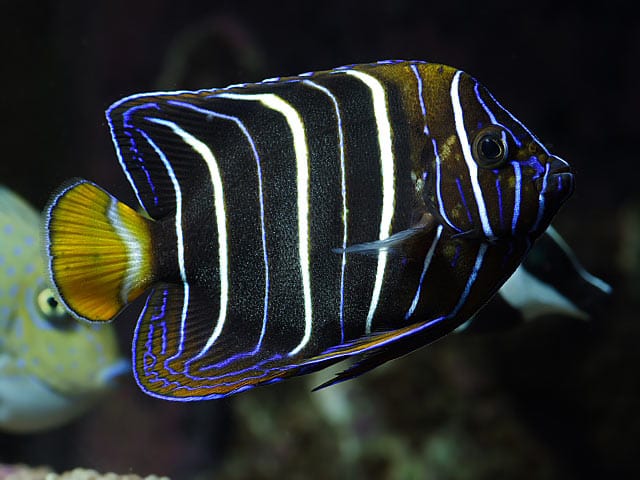
Chrysurus Angelfish Africa Pomacanthus chrysurus
- Description
- Additional Information
- Reviews
Chrysurus Angelfish from African Waters
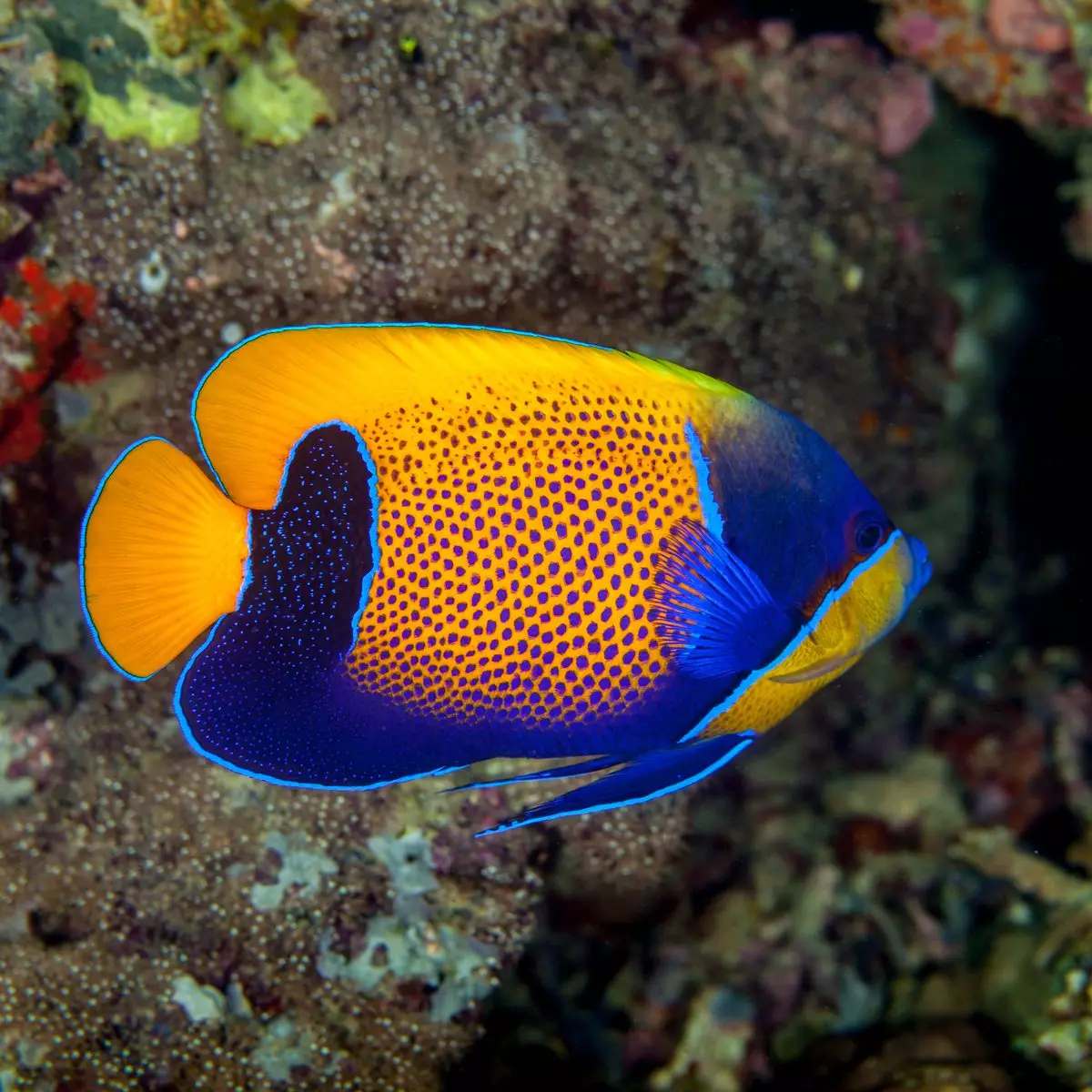
The Chrysurus Angelfish brings a heavier, more grounded look compared to brighter angelfish species. Its dark base color gives it depth, while the contrast from blue edging and a developing yellow tail adds just enough flash without overpowering the tank. It doesn’t rely on brightness—it stands out through contrast and movement.
Among larger Angelfish, this species feels more deliberate. It doesn’t dart constantly. Instead, it cruises with purpose, weaving through rockwork and occasionally stepping into open water. That slower, controlled movement makes it feel established in the tank rather than just passing through.
Natural Range and Behavior
This species comes from the western Indian Ocean, including areas along the African coastline and nearby reef systems. In the wild, it stays close to structure—rock faces, reef ledges, and deeper coral zones.
That behavior carries over in captivity. It prefers defined territory with caves and overhangs. Once it picks a zone, it will return to it consistently, especially when resting or reacting to changes in the environment.
Aquarium Setup and Space Requirements
The Chrysurus Angelfish grows into a large, confident fish that needs room to move and establish territory.
- Use a minimum of 150–220 gallons depending on long-term planning
- Build out rockwork with depth, not just height
- Leave open swimming lanes between structures
Strong filtration and stable conditions matter more than anything else. This species handles minor fluctuations poorly compared to smaller angels.
Diet and Feeding Approach
This fish benefits from a structured feeding routine that includes both plant and protein sources.
A balanced diet should include:
- Marine algae and spirulina-based foods
- Mysis shrimp and enriched brine shrimp
- Sponge-based angelfish formulas
- High-quality pellets for daily consistency
Feed two to three times daily. A consistent schedule helps reduce aggression and improves overall coloration.
Reef Compatibility
This is not a reef-safe angelfish in the traditional sense. It will test corals, clams, and sessile invertebrates over time.
Fish-only systems or carefully selected mixed setups work best. If placed in a reef environment, expect some level of interaction with coral tissue.
Chrysurus Angelfish Care Profile
- Scientific Name: Pomacanthus chrysurus
- Family: Pomacanthidae
- Origin: Western Indian Ocean (African coastline, Madagascar region)
- Care Level: Moderate
- Temperament: Semi-aggressive
- Diet: Omnivore
- Reef Safe: Monitor
- Coral Safe: Monitor
- Invertebrate Safe: Monitor
- Minimum Tank Size: 150 gallons
- Max Size: 12–13 inches
Water Parameters:
- Temperature: 72°F – 78°F
- pH: 8.1 – 8.4
- dKH: 8 – 12
- Water Density (Specific Gravity): 1.020 – 1.025
Why This Fish Works in the Right Setup
The Chrysurus Angelfish fits systems that need a strong visual anchor without relying on bright neon coloration. It adds weight to the tank—both visually and behaviorally.
It’s a long-term fish. With proper space and stable conditions, it settles in, establishes territory, and becomes part of the structure of the aquarium itself rather than just another inhabitant.
Commonly Asked Questions About the Chrysurus Angelfish
Is the Chrysurus Angelfish reef safe?
Not reliably. It may nip at corals and invertebrates, especially as it matures.
How large does this species get?
It can reach around 12 to 13 inches, requiring a large aquarium long term.
Can it live with other angelfish?
Usually no in standard tanks. Only attempt in very large systems with clear territory separation.
What makes it different from brighter angelfish?
It relies on contrast and movement rather than bright coloration, giving it a more natural, grounded look.
Reviews
There are no reviews yet.