



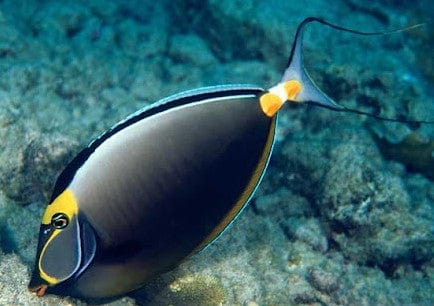
Vanuatu Naso Tang Naso lituratus
- Description
- Additional Information
- Reviews
Vanuatu Naso Tang – Growth, Structure, and Long-Term Reef Presence
The Vanuatu Naso Tang develops into a very different fish from what it appears as a juvenile. Early on, it shows a simpler profile, but over time, its body lengthens, the tail structure becomes more pronounced, and its overall presence in the aquarium expands. This gradual transformation makes it one of the more rewarding species for aquarists focused on long-term growth.
How the Naso Tang Changes with Age
The Naso Tang from Vanuatu follows a steady progression in both structure and appearance. As it matures, the body becomes more elongated, facial markings sharpen, and the tail begins forming its characteristic lyre shape. These changes give the fish a more defined and balanced look as it reaches adult size.
Appearance and Color Development
This variant emphasizes natural shading and gradual visual change.
- Grey to muted blue body tones with soft blending
- Yellow accents along the tail edges
- Facial markings that become clearer with maturity
- Tail extensions that develop with age
Color depth and structure improve over time in stable systems.
Behavior and Tank Compatibility
The Vanuatu Naso Tang adapts well when given space and stable tank conditions.
- Active swimmer that prefers open areas
- Generally peaceful but may show mild territorial behavior toward tangs
- Establishes consistent swimming patterns
- Benefits from a well-planned tankmate hierarchy
Compatible tankmates may include:
- Foxface Rabbitfish (Siganus vulpinus)
- Lyretail Anthias (Pseudanthias squamipinnis)
- Blue-Green Chromis (Chromis viridis)
- Cleaner Wrasse (Labroides dimidiatus)
- Peaceful angelfish and reef-safe species
Avoid overcrowding with more then a few tangs in smaller systems. A larger system is recommended.
Aquarium Setup and Requirements
A stable environment supports long-term development.
- Minimum tank size of 180 gallons
- Extended swimming lanes for uninterrupted movement
- Mature live rock for grazing
- Strong filtration and consistent flow
Larger aquariums allow this species to reach its full potential.
Feeding Strategy and Diet
The Vanuatu Naso Tang thrives on a consistent herbivore-based diet.
- Daily offerings of nori or marine algae
- Spirulina-based pellets and herbivore blends
- Occasional mysis shrimp or enriched brine
- Multiple feedings per day
Regular feeding supports growth and reduces stress.
Care Stats and Facts
- Care Level: Moderate
- Temperament: Semi-aggressive
- Diet: Herbivore with supplemental protein
- Reef Compatible: Yes
- Water Temperature: 72–78°F
- Specific Gravity: 1.020–1.025
- pH Range: 8.1–8.4
- dKH: 8–12
- Max Size: Up to 18 inches
- Origin: Vanuatu (Indo-Pacific)
- Family: Acanthuridae
- Minimum Tank Size: 180 gallons
What Sets the Vanuatu Naso Tang Apart Over Time
This Vanuatu variant rewards patience. As it settles in, its swimming routes become consistent, and its body structure fills out, giving it a more defined, confident presence in the aquarium.
Given adequate space and stable conditions, it transitions from a reserved juvenile into a highly visible, active fish that contributes both movement and balance to larger reef systems.
Reviews
There are no reviews yet.