





Imperator Angelfish Changing – Pomacanthus imperator
Notify Me When In Stock
Imperator Angelfish Changing – Pomacanthus imperator Care Guide
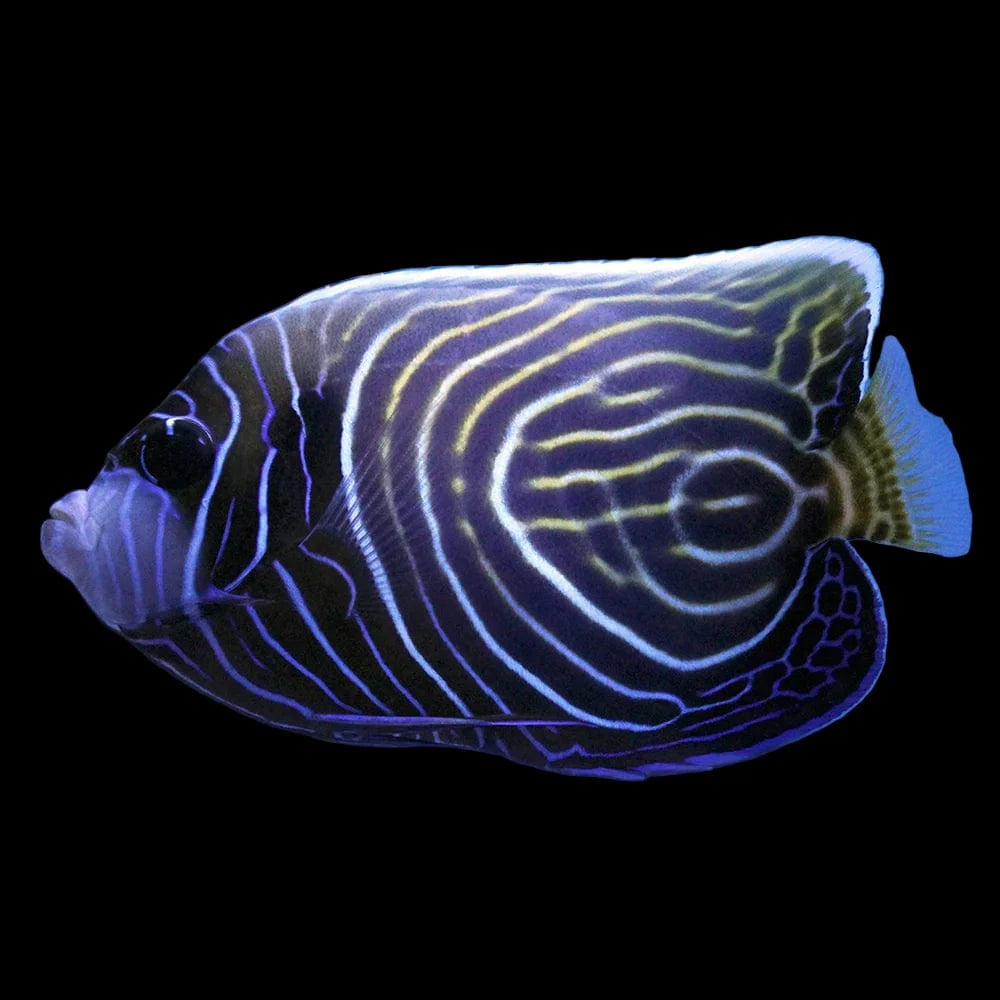
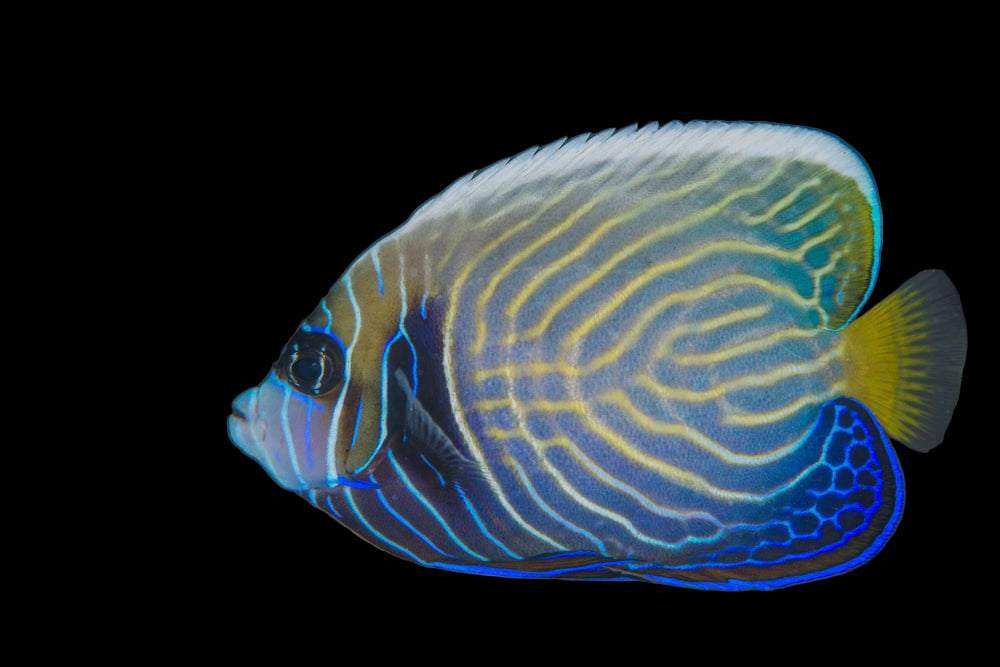
The Changing Imperator Angelfish (Pomacanthus imperator), commonly known as the Emperor Angelfish, is a fascinating transitional-stage marine angelfish that displays characteristics of both its juvenile and adult coloration. During this phase, the familiar juvenile blue-and-white rings begin to break apart while the horizontal yellow-and-blue stripes of the adult gradually emerge.
This changing stage is especially appealing for aquarists who want to observe one of the most dramatic color transformations among large marine angelfish. No two specimens transition in exactly the same way, giving each changing Imperator Angelfish a unique appearance.
Browse additional saltwater angelfish to compare species, sizes, coloration, and aquarium requirements.
Changing Imperator Angelfish Coloration
Changing Emperor Angelfish display a mix of juvenile and adult markings. Portions of the body may still retain curved white and electric-blue rings, while new horizontal yellow and blue striping begins developing across the sides.
The face also starts to change, with darker masking and stronger blue facial markings becoming more visible. The tail gradually shifts toward the bright yellow coloration associated with mature adults.
Because the fish is actively transitioning, coloration can vary considerably between individual specimens and may continue changing noticeably over time.
Juvenile to Adult Transformation
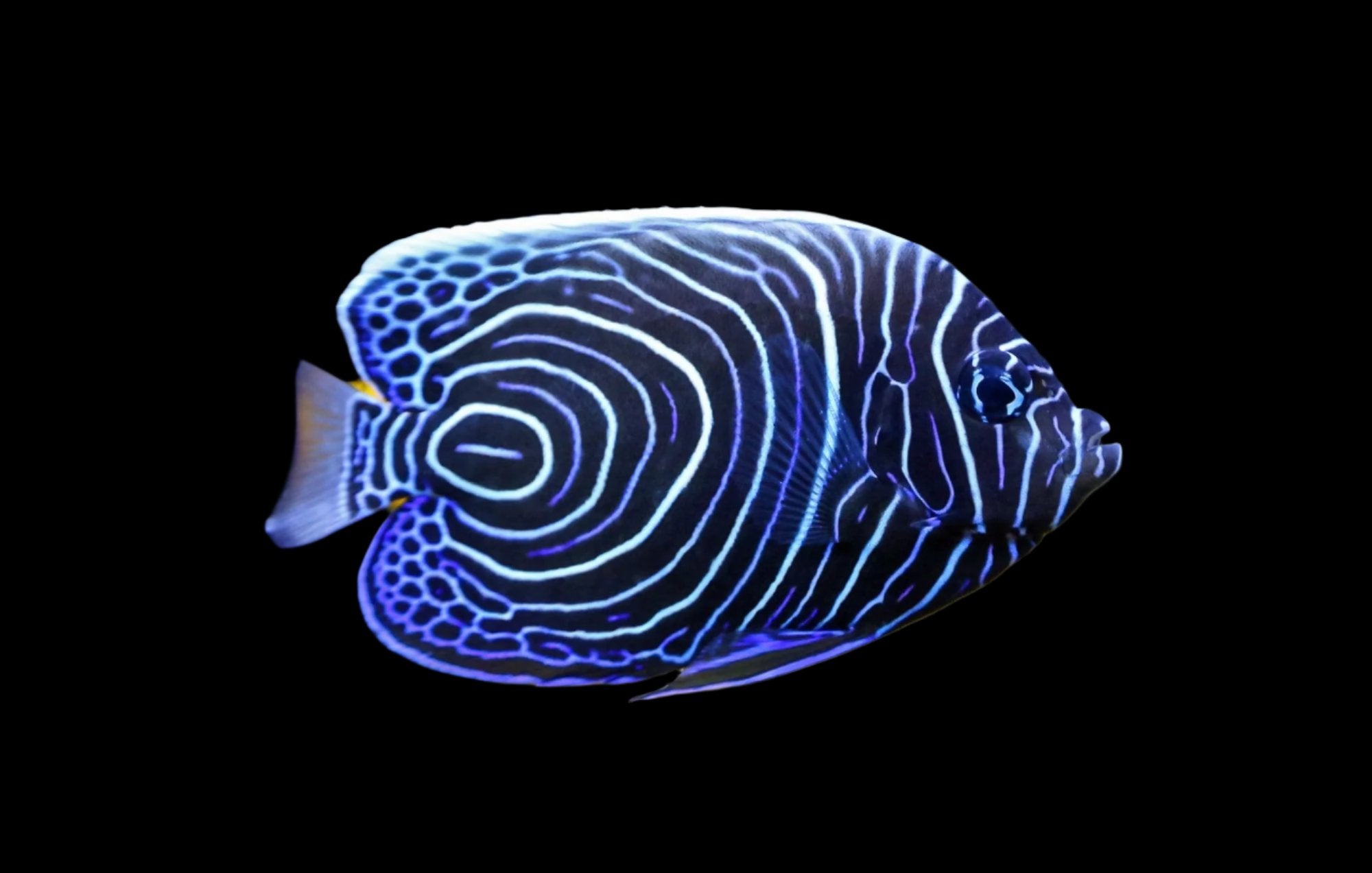
Juvenile Emperor Angelfish begin with a deep blue to nearly black body covered in sweeping white and electric-blue rings. As they mature, these curved markings gradually fragment and disappear.
Adult Emperor Angelfish ultimately develop a yellow body crossed by numerous horizontal blue lines, a dark blue facial mask, electric-blue facial accents, and a bright yellow tail.
The changing stage bridges these two dramatically different appearances and is one of the most visually interesting periods in the development of Pomacanthus imperator.
Changing Emperor Angelfish Behavior and Temperament
The Changing Emperor Angelfish is generally considered semi-aggressive. As the fish matures, it typically becomes more confident and may show increasing territorial behavior toward other large angelfish or similarly shaped fish.
Provide substantial rockwork, large caves, and visual barriers so the fish can establish a secure territory while still having broad open areas for swimming.
Keeping a single large angelfish is generally the easiest approach unless the aquarium is exceptionally spacious.
Natural Habitat and Distribution
Pomacanthus imperator has a broad Indo-Pacific distribution and inhabits coral-rich lagoons, reef slopes, channels, and outer reef environments.
Juveniles often remain in sheltered areas near caves and ledges, while larger changing and adult fish make greater use of open reef areas while still staying close to substantial structure.
Aquariums should provide a similar combination of large rock formations, secure retreat areas, and open swimming space.
Changing Imperator Angelfish Aquarium Setup
A mature aquarium of approximately 220 gallons or larger is recommended for long-term care. Changing Emperor Angelfish are already progressing toward their substantial adult size and can eventually reach approximately 15 inches.
Provide large caves, arches, overhangs, and stable rock structures while leaving broad swimming lanes through the aquarium.
Strong biological filtration, stable water chemistry, and consistent maintenance are important as the fish grows and produces a greater biological load.
Emperor Angelfish Diet and Feeding
The Emperor Angelfish is an omnivore that naturally consumes sponges, tunicates, algae, and other reef-associated foods. A varied diet is important during the changing stage to support healthy growth, coloration, and body condition.
Recommended foods include:
- Sponge-based marine angelfish preparations
- Spirulina and marine algae
- Marine algae sheets or nori
- Mysis shrimp
- Enriched brine shrimp
- Finely chopped clam and marine seafood
- Frozen marine omnivore blends
- High-quality marine pellets
Feed two to three smaller meals throughout the day when possible. Mature live rock can also provide additional grazing opportunities between scheduled feedings.
Is the Changing Emperor Angelfish Reef Safe?
The Emperor Angelfish is generally not considered reliably reef safe. It may nip at or consume soft corals, stony corals, clam mantles, sponges, tunicates, and other sessile invertebrates.
As the fish matures and becomes more confident, the risk of coral or clam damage may increase.
Fish-only and fish-only-with-live-rock aquariums provide the most predictable environment.
Suitable Tankmates for Changing Emperor Angelfish
The Changing Emperor Angelfish can coexist with many medium to large marine fish when adequate space is available. Suitable tankmates may include:
- Tangs and surgeonfish
- Rabbitfish
- Larger wrasses
- Larger clownfish
- Hawkfish
- Compatible triggerfish
- Other moderately assertive marine fish
Avoid very timid tankmates that may be intimidated by the growing Emperor Angelfish. Additional large angelfish should generally only be considered in exceptionally spacious systems.
Changing Imperator Angelfish Care Facts
- Care Level: Moderate
- Temperament: Semi-Aggressive
- Diet: Omnivore / Sponge Feeder
- Reef Compatible: No / With Significant Caution
- Minimum Tank Size: 220 gallons
- Maximum Size: Approximately 15 inches
- Life Stage: Changing / Transitional
- Natural Range: Indo-Pacific
- Family: Pomacanthidae
- Scientific Name: Pomacanthus imperator
- Common Names: Emperor Angelfish, Imperator Angelfish
Recommended Water Parameters
- Temperature: 72–78°F
- Specific Gravity: 1.020–1.025
- pH: 8.1–8.4
- Alkalinity: 8–12 dKH
Approximate Purchase Size – Changing
- Changing Small: Approximately 3""–4""
- Changing Medium: Approximately 4""–5""
- Changing Large: Approximately 5""–6""
Actual purchase size, coloration, and degree of transition may vary between individual specimens.
Why Choose a Changing Emperor Angelfish?
The Changing Emperor Angelfish offers the opportunity to observe one of the most dramatic transformations in marine aquarium fish. Juvenile blue-and-white rings gradually give way to horizontal yellow-and-blue adult striping, creating a unique appearance throughout the transition.
For aquarists with a very large, mature aquarium, Pomacanthus imperator can develop into an impressive centerpiece fish with substantial size, personality, and long-term visual appeal.
Explore more angelfish for saltwater aquariums to compare additional species, sizes, coloration, and care requirements.
Frequently Asked Questions About Changing Emperor Angelfish
What does changing Emperor Angelfish mean?
A changing Emperor Angelfish is transitioning from its juvenile blue-and-white ring pattern into the horizontal yellow-and-blue coloration of an adult.
How long does an Emperor Angelfish keep its changing coloration?
The transition happens gradually as the fish matures. The exact timing varies by individual, growth rate, diet, and environmental conditions, so changing specimens can display mixed patterns for an extended period.
How large does an Emperor Angelfish get?
The Emperor Angelfish can reach approximately 15 inches in total length and develops a deep-bodied profile as it matures.
What size aquarium does a Changing Emperor Angelfish need?
A mature aquarium of approximately 220 gallons or larger is recommended for long-term care. Aquarium planning should be based on adult size rather than current transitional size.
Is the Emperor Angelfish reef safe?
Not reliably. Emperor Angelfish may nip at or consume corals, clam mantles, sponges, tunicates, and other sessile invertebrates.
What should I feed a Changing Emperor Angelfish?
Offer a varied diet containing sponge-based marine angelfish foods, Spirulina, marine algae, mysis shrimp, enriched brine shrimp, clam, and high-quality prepared marine foods.
Does every changing Emperor Angelfish look the same?
No. Each specimen can transition at a slightly different rate, so the balance of juvenile rings and emerging adult stripes varies considerably between individual fish.
Coral Culture Check-In


- Additional Information
- Reviews

Reviews
There are no reviews yet.