



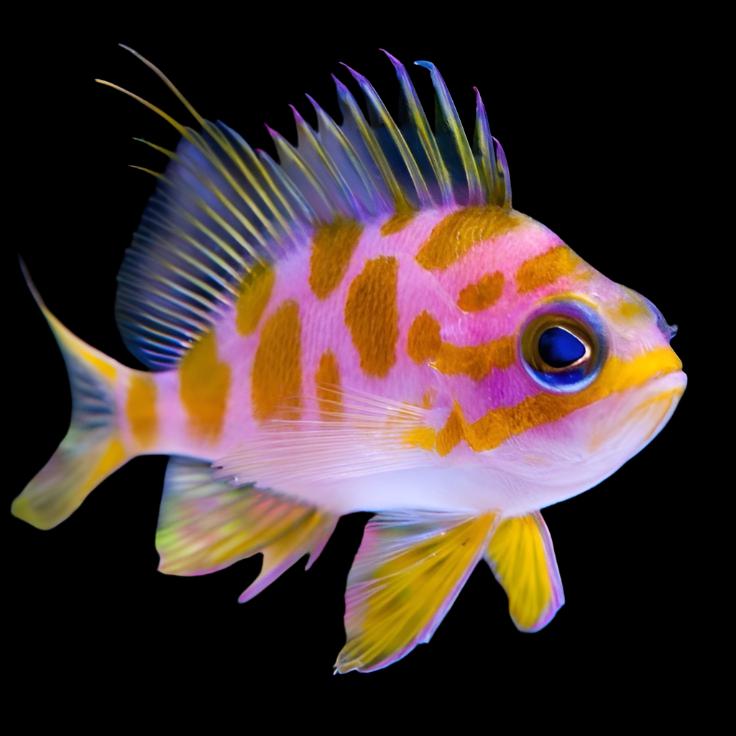
Borbonius (Blotchy) Anthias - Odontanthias borbonius
Notify Me When In Stock
The Borbonius Anthias (Odontanthias borbonius), also known as the Blotchy Anthias, is a rare deepwater reef fish known for its pale pink to cream body covered with bold red-orange blotches and striking contrasting markings. Best suited for mature marine aquariums with shaded retreats, excellent water quality, and peaceful tankmates, this distinctive anthias benefits from frequent small feedings and careful acclimation.

- Description
- Additional Information
- Reviews
Borbonius (Blotchy) Anthias – Odontanthias borbonius Care Guide
The Borbonius Anthias (Odontanthias borbonius), commonly called the Blotchy Anthias, is a rare and highly distinctive deepwater reef fish prized for its pale pink to cream body, bold red-orange blotches, and unusual high-contrast pattern. Its unique appearance makes it one of the most recognizable anthias in the marine aquarium trade.
The species was historically classified as Holanthias borbonius, and that name still appears in older aquarium references and supplier catalogs. Current taxonomic references generally recognize Odontanthias borbonius as the accepted scientific name.
Because this species naturally inhabits deeper reef environments, it is best suited for experienced aquarists who can provide a mature aquarium, excellent water quality, shaded shelter, and careful feeding.
Borbonius Anthias Appearance
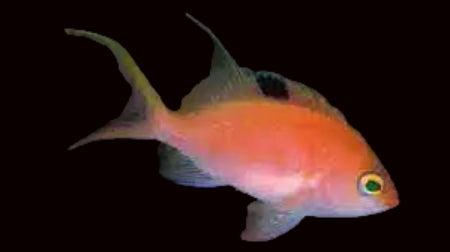
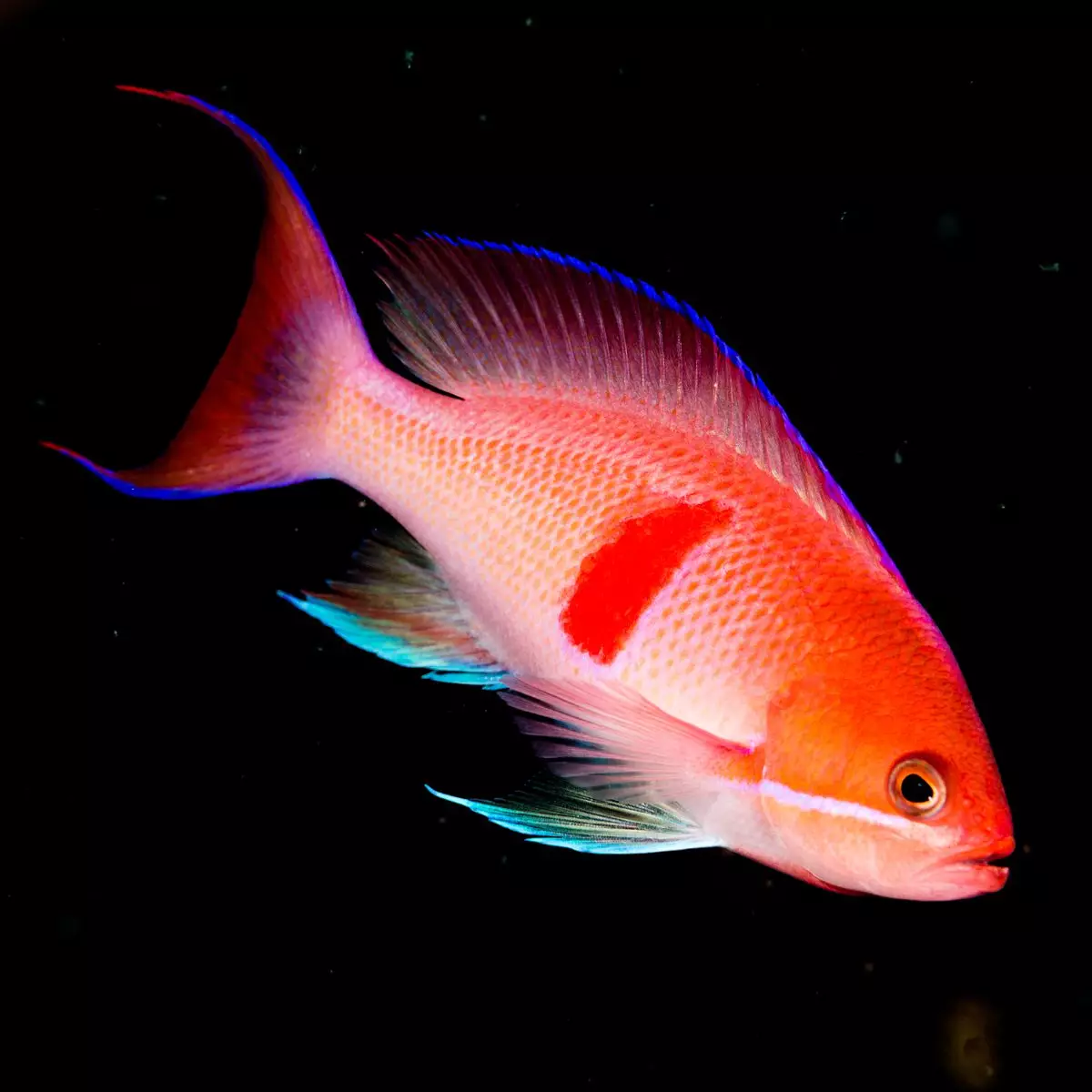
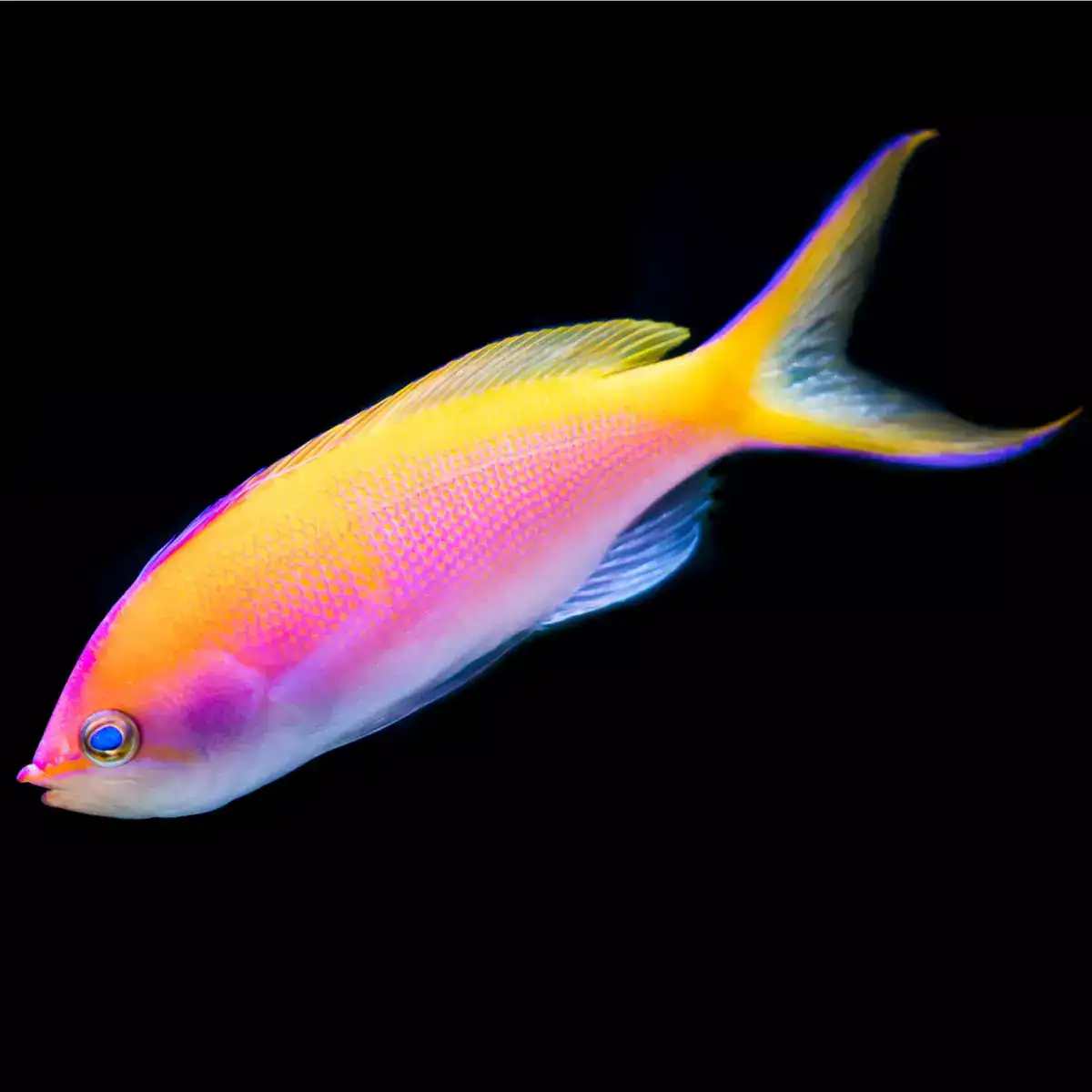
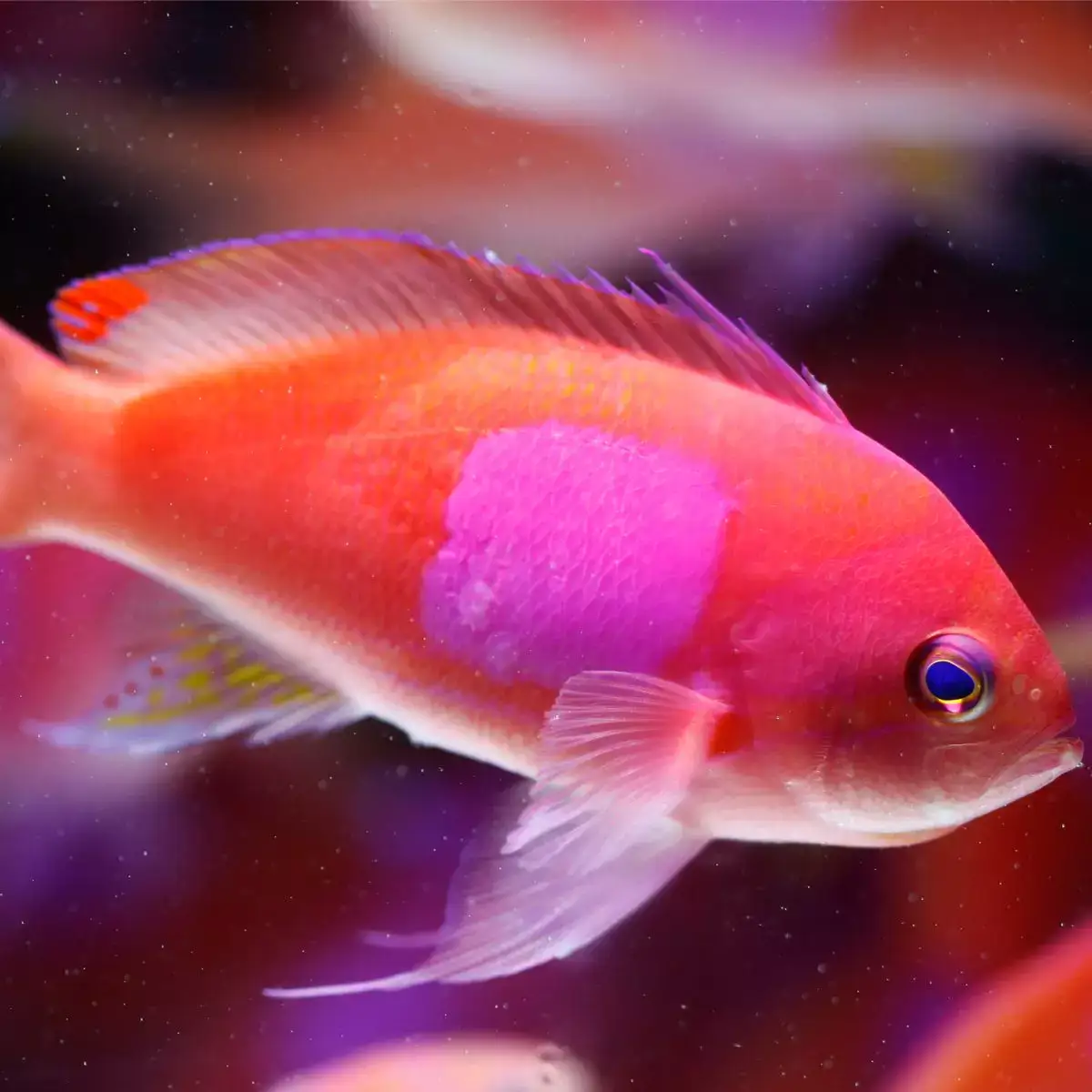
Odontanthias borbonius typically displays a pale pink, peach, or cream-colored body covered with large irregular red to orange blotches. These markings give the fish the distinctive “blotchy” appearance behind its common name.
The head and fins may also display reddish, orange, or pink tones, while individual blotches vary naturally in shape, size, and intensity.
Exact coloration can shift somewhat depending on lighting, depth acclimation, stress level, and individual variation.
Deepwater Anthias Behavior
The Borbonius Anthias is generally considered peaceful to moderately assertive. Unlike many shallow-water anthias that remain continuously active in bright open water, this species often prefers shaded areas, caves, and deeper sections of the aquarium.
Newly introduced specimens may remain close to shelter during acclimation. Providing secure caves and dimmer areas can help reduce stress and encourage normal feeding behavior.
Once established, individuals often become more confident and may spend increasing amounts of time in open water.
Natural Habitat and Distribution
Odontanthias borbonius has a broad Indo-Pacific distribution extending from South Africa across the Indian Ocean and into the western Pacific, including regions as far north as Japan and east toward Palau.
The species is a true deepwater anthias and has been recorded from roughly 70 to 300 meters deep, with many observations occurring around caves and steep reef structures.
Its deepwater origin is important when planning aquarium lighting, acclimation, and long-term habitat.
Borbonius Anthias Aquarium Setup
A mature aquarium of approximately 75 gallons or larger is recommended for a single specimen, with additional space preferred for multiple anthias.
Provide substantial rockwork with caves, overhangs, shaded ledges, and darker retreat areas. Open swimming room should also be available for established specimens.
Subdued lighting during the initial acclimation period can be helpful. The fish may gradually adapt to brighter reef lighting as long as shaded areas remain available.
Strong biological filtration, stable salinity, good oxygenation, and consistently high water quality are important for long-term success.
Borbonius Anthias Diet and Feeding
The Borbonius Anthias is primarily a planktivorous carnivore and should receive frequent small meals containing high-quality marine proteins.
Recommended foods include:
- Mysis shrimp
- Enriched brine shrimp
- Copepods
- Calanus and other planktonic foods
- Frozen plankton blends
- Finely chopped shrimp and marine seafood
- Small high-quality carnivore pellets
- Fine marine flakes once accepted
Offer multiple small meals throughout the day whenever possible. Newly imported specimens may initially respond best to frozen or live planktonic foods.
Closely monitor body condition during acclimation, as deepwater anthias can be reluctant feeders when stressed.
Is the Borbonius Anthias Reef Safe?
The Borbonius Anthias is generally considered reef safe. It does not normally graze on corals, clam mantles, or other sessile reef invertebrates.
Its natural feeding behavior centers on small planktonic and meaty foods suspended in the water column, making it well suited for coral-focused aquariums.
Keeping Borbonius Anthias with Other Anthias
Borbonius Anthias can be maintained singly or with compatible anthias when sufficient aquarium space is available.
Because individuals may establish territories and social dominance, introductions should be monitored carefully. Providing multiple caves and visual barriers can reduce competition.
Avoid overcrowding or combining multiple aggressive anthias species in smaller systems.
Suitable Tankmates for Borbonius Anthias
Suitable tankmates may include:
- Clownfish
- Fairy and flasher wrasses
- Cardinalfish
- Gobies
- Blennies
- Peaceful dwarf angelfish
- Other compatible anthias
- Tangs in appropriately sized aquariums
Avoid extremely aggressive tankmates that may intimidate the Borbonius Anthias or prevent it from feeding consistently.
Borbonius Blotchy Anthias Care Facts
- Care Level: Moderate to Advanced
- Temperament: Peaceful to Moderately Assertive
- Diet: Planktivorous Carnivore
- Reef Compatible: Yes
- Minimum Tank Size: Approximately 75 gallons
- Maximum Size: Approximately 6 inches
- Natural Range: Indo-Pacific
- Natural Depth: Approximately 70–300 meters
- Family: Anthiadidae
- Accepted Scientific Name: Odontanthias borbonius
- Former Scientific Name: Holanthias borbonius
- Common Names: Borbonius Anthias, Blotchy Anthias, Checked Swallowtail
Recommended Water Parameters
- Temperature: 70–76°F
- Specific Gravity: 1.020–1.025
- pH: 8.1–8.4
- Alkalinity: 8–12 dKH
Approximate Purchase Size
- Small: Approximately 1.5"–2.5"
- Medium: Approximately 2.5"–4"
- Large: Approximately 4"–5.5"
Actual purchase size, blotch pattern, and intensity of the pink, cream, red, and orange coloration may vary between individual specimens.
Why Choose a Borbonius (Blotchy) Anthias?
The Borbonius Anthias offers one of the most unusual patterns found among marine anthias, combining a pale body with large irregular red-orange blotches.
Its deepwater origin, distinctive coloration, and relative rarity make Odontanthias borbonius especially appealing to aquarists looking for an uncommon showpiece reef fish.
For aquarists prepared to provide a mature system, careful acclimation, shaded shelter, and frequent feeding, the Borbonius Anthias can become an exceptional centerpiece species.
Frequently Asked Questions About Borbonius Anthias
What is the correct scientific name for the Borbonius Anthias?
The currently accepted scientific name is Odontanthias borbonius. The species was historically listed as Holanthias borbonius, and that older name may still appear in supplier catalogs and aquarium references.
Why is it called the Blotchy Anthias?
The name refers to the large irregular red-orange blotches covering the pale pink to cream body.
How large does a Borbonius Anthias get?
Odontanthias borbonius can reach approximately 6 inches in length.
What size aquarium does a Borbonius Anthias need?
A mature aquarium of approximately 75 gallons or larger is recommended, with abundant caves, shaded retreats, and open swimming space.
Is the Borbonius Anthias reef safe?
Yes. The species is generally considered reef safe and does not normally damage corals or sessile invertebrates.
What should I feed a Borbonius Anthias?
Offer several small meals throughout the day containing mysis shrimp, enriched brine shrimp, copepods, Calanus, frozen plankton, and other appropriately sized meaty foods.
Does the Borbonius Anthias need dim lighting?
Because it naturally inhabits deep water, subdued lighting and shaded areas can be helpful during acclimation. Established specimens may adapt to brighter reef lighting when secure shaded retreats remain available.
How deep does the Borbonius Anthias live?
The species has been recorded from roughly 70 to 300 meters deep, making it a true deepwater anthias.
Can Borbonius Anthias be kept with other anthias?
Yes, but adequate aquarium space, multiple retreat areas, and compatible temperaments are important. Monitor interactions closely when combining multiple anthias species.

Reviews
There are no reviews yet.