




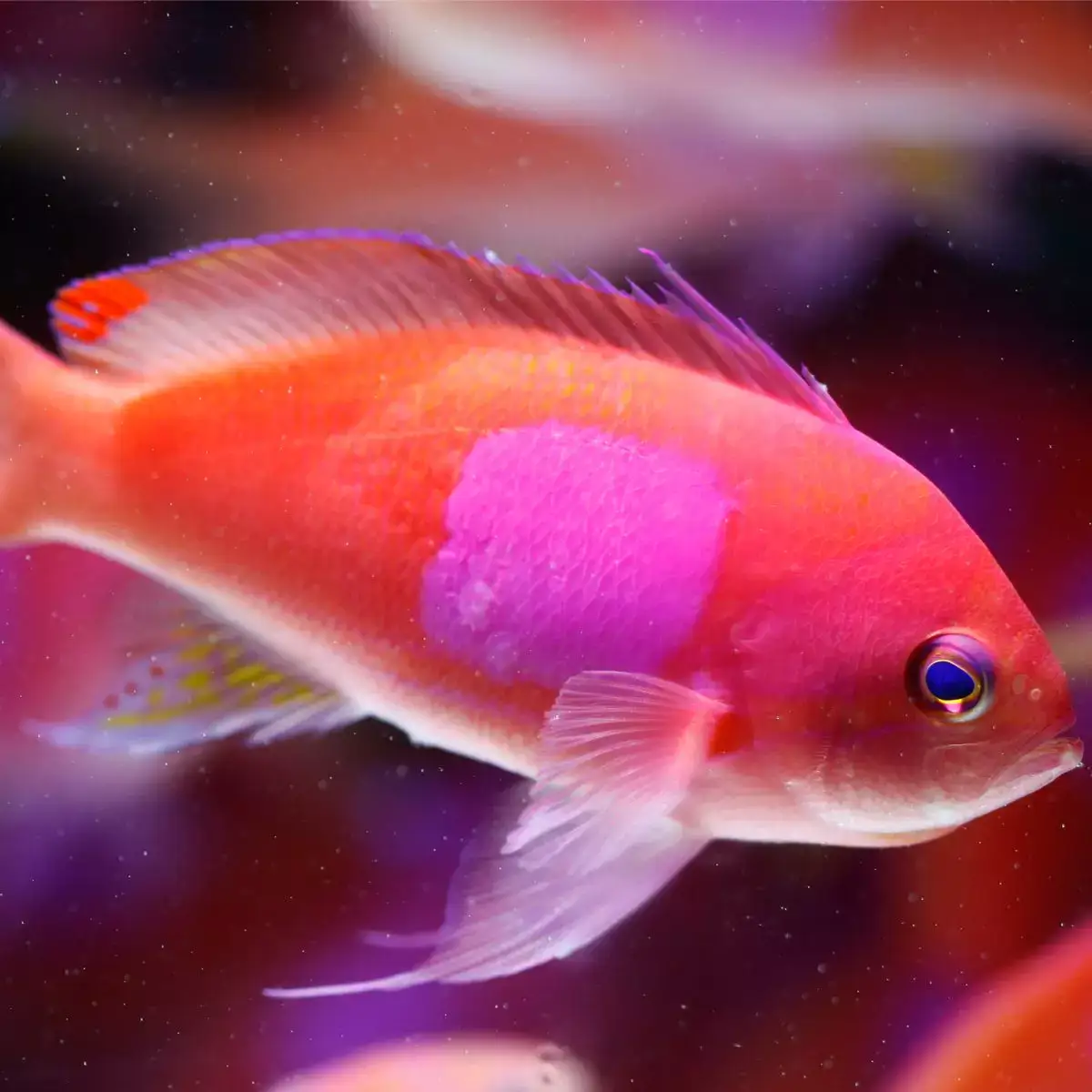
Male Pink Square Anthias - Pseudanthias pleurotaenia
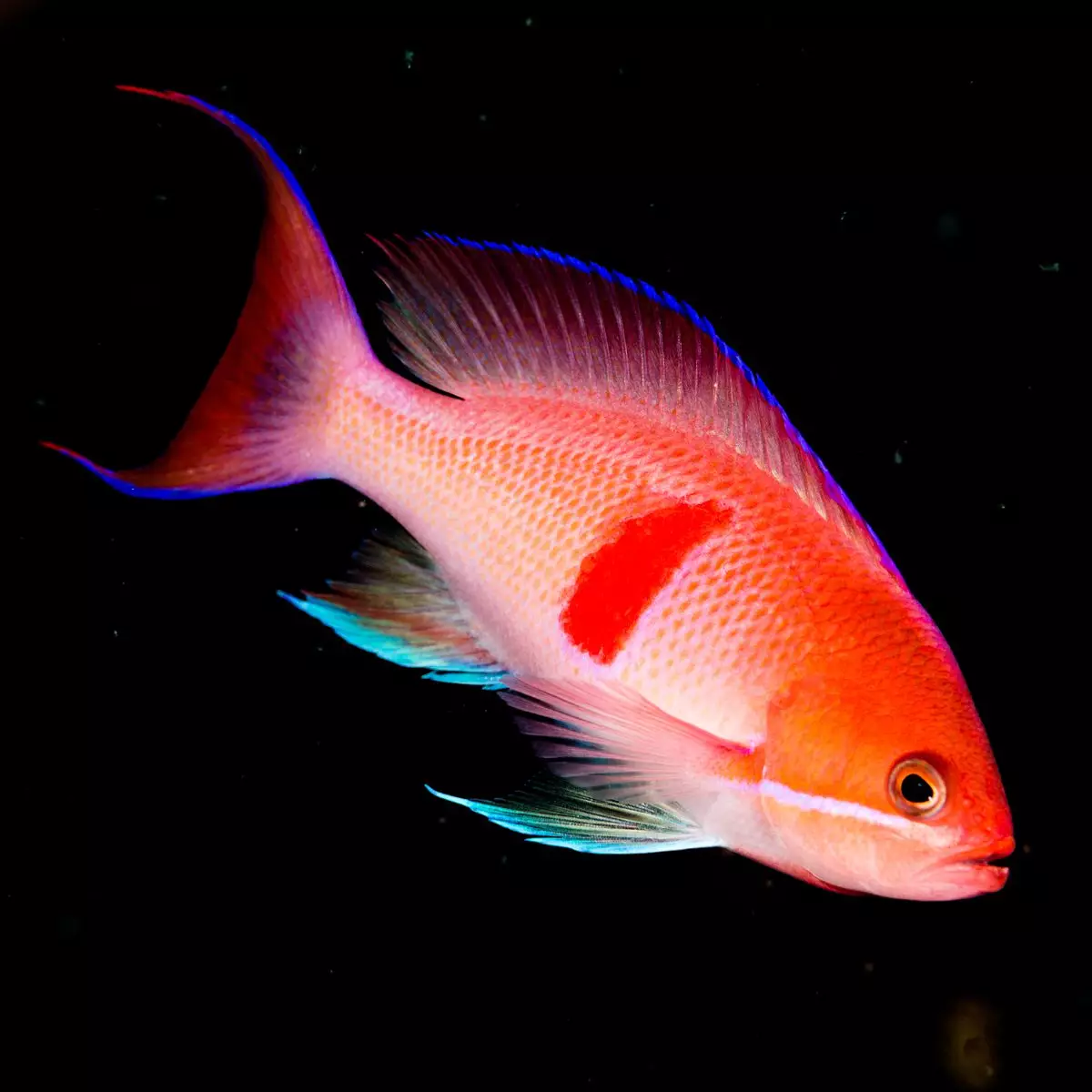
The Male Square (Pink) Anthias (Pseudanthias pleurotaenia) is a striking reef fish known for its rich pink to reddish coloration, distinctive pale square-shaped flank marking, and elegant lyretail profile. Naturally found in aggregations above current-swept reef slopes and drop-offs, this reef-safe planktivore is best suited for mature aquariums with ample swimming room, strong circulation, secure rockwork, and multiple small feedings throughout the day.

- Description
- Additional Information
- Reviews
Square (Pink) Anthias Male – Pseudanthias pleurotaenia Care Guide
The Male Square (Pink) Anthias (Pseudanthias pleurotaenia) is a colorful and unmistakable reef fish prized for its rich pink to reddish-purple coloration, pale square-shaped flank marking, and elegant fin development. Mature males look dramatically different from females, making this species especially attractive in social anthias displays.
Pseudanthias pleurotaenia is widely known as the Squarespot Anthias or Square-spot Fairy Basslet. The pale square or rectangular patch on the side of a mature male is one of the species’ most recognizable characteristics.
Male Square Pink Anthias Appearance
Male Pseudanthias pleurotaenia typically develop deep pink, reddish, magenta, or purplish coloration across much of the body.
The most distinctive feature is the pale square-shaped or rectangular marking on the flank, which can vary in size and intensity between individual males.
Mature males also develop an elongated third dorsal spine and a strongly lunate tail, giving them a more dramatic profile than females.
Exact coloration can vary naturally with maturity, social status, geographic origin, and aquarium lighting.
Male and Female Differences
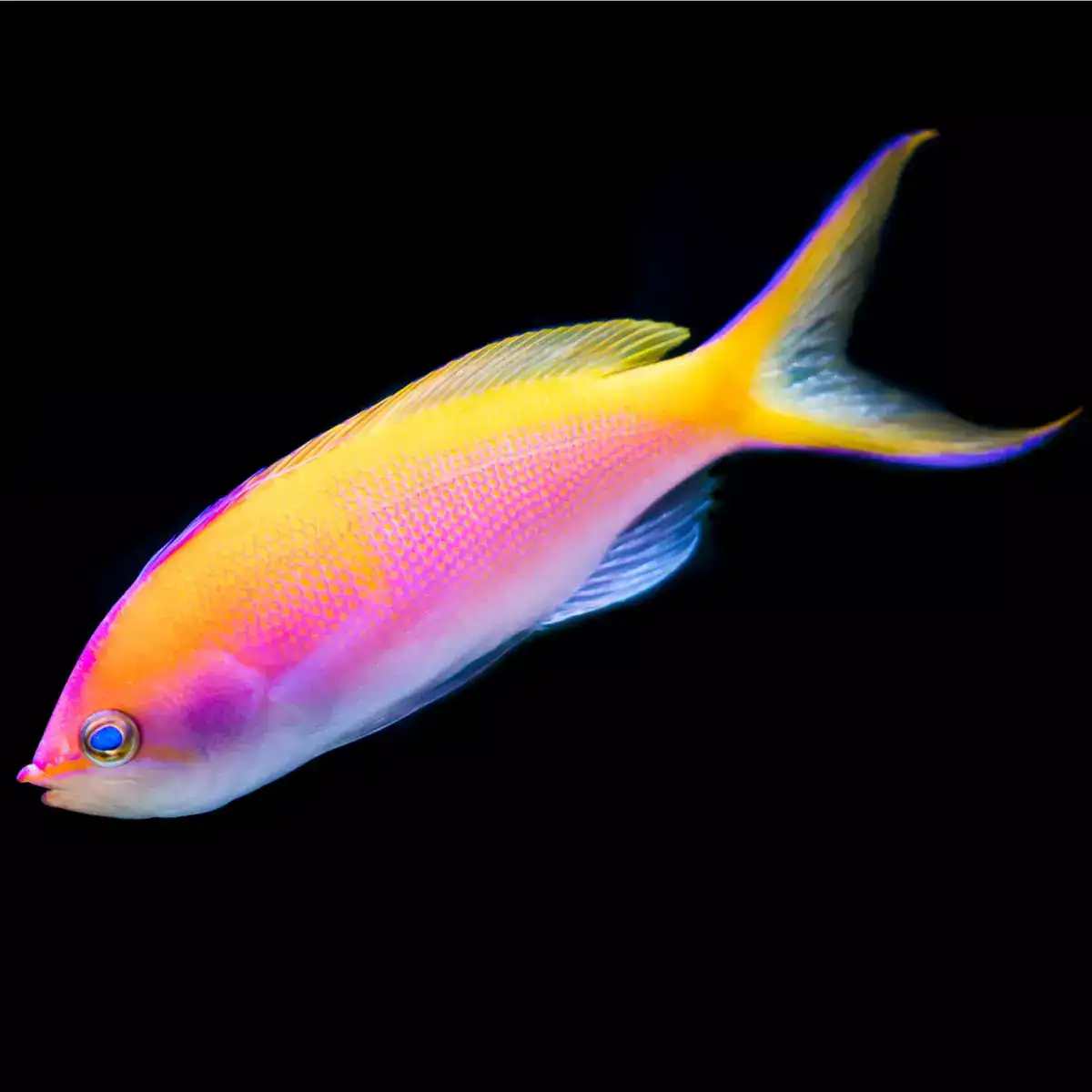
Square Anthias are strongly sexually dimorphic, meaning mature males and females have noticeably different coloration and fin structure.
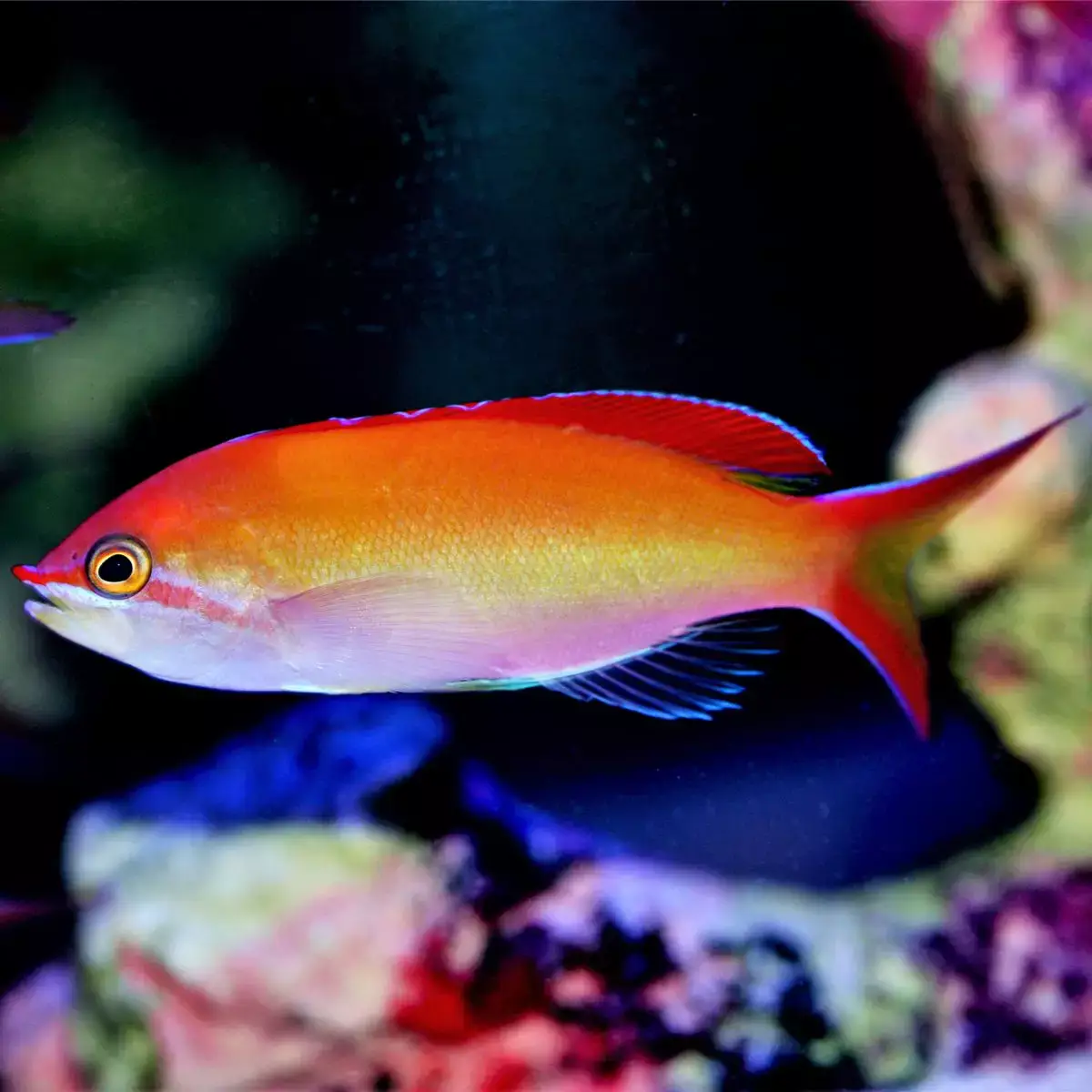
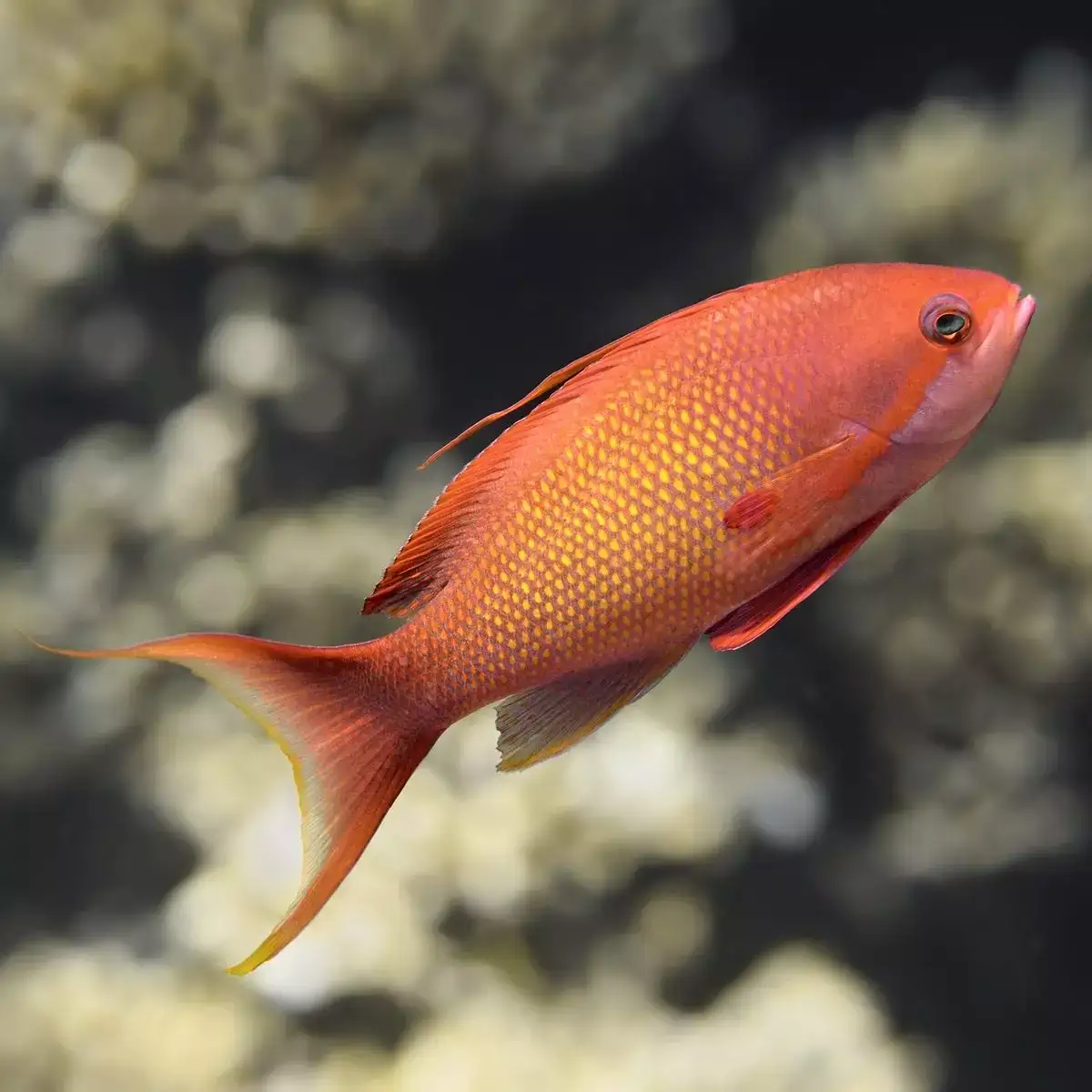
Males generally develop deep pink, red, magenta, or purple coloration with the characteristic pale flank marking, while females are usually bright yellow to orange.
Males also become larger and develop more pronounced fin extensions than females.
Behavior and Temperament
The Male Square Pink Anthias is generally considered peaceful to moderately assertive.
In nature, this species forms aggregations above reef slopes and drop-offs where individuals feed on zooplankton carried through the water column.
Mature males may become territorial toward rival males and may chase females while maintaining social hierarchy.
Natural Habitat and Distribution
Pseudanthias pleurotaenia has a broad western and central Pacific distribution, extending from Indonesia eastward across island reef systems toward Samoa, north to the Ryukyu Islands, and south toward New Caledonia and surrounding regions.
The species is commonly associated with current-swept reef slopes, drop-offs, and outer reef environments.
Although records extend to considerable depth, many individuals are encountered in relatively shallow reef habitats above coral-rich slopes.
Male Square Pink Anthias Aquarium Setup
A mature aquarium of approximately 125 gallons or larger is recommended for an adult male, with substantially larger systems preferred for social groups.
Provide generous open swimming space through the middle and upper portions of the aquarium while maintaining caves, ledges, and stable rockwork for shelter.
Moderate to strong circulation, excellent oxygenation, mature biological filtration, and stable water chemistry are important for long-term care.
Square Pink Anthias Diet and Feeding
The Square Pink Anthias is primarily a planktivorous carnivore that naturally feeds on small suspended organisms in the water column.
Recommended foods include:
- Mysis shrimp
- Enriched brine shrimp
- Copepods
- Calanus and other planktonic foods
- Frozen zooplankton blends
- Finely chopped marine seafood
- High-quality marine pellets
- Marine flakes once accepted
Offer multiple small meals throughout the day whenever possible. Frequent feeding helps replicate the species’ natural plankton-feeding behavior and supports healthy body condition and strong coloration.
Is the Male Square Pink Anthias Reef Safe?
The Male Square Pink Anthias is generally considered reef safe. It feeds primarily on planktonic organisms and is not expected to damage corals, clam mantles, or other sessile reef invertebrates.
Its bold coloration and active swimming behavior make it especially attractive in large coral-focused aquariums.
Keeping Square Anthias in Groups
Pseudanthias pleurotaenia naturally occurs in aggregations and can be maintained socially in sufficiently large aquariums.
A group consisting of one male with several females generally provides the most natural arrangement.
Because adult males are significantly larger and more territorial than females, multiple mature males should only be attempted in exceptionally large systems.
Provide multiple retreat areas and distribute food throughout the aquarium so subordinate individuals can feed without excessive competition.
Suitable Tankmates for Male Square Pink Anthias
Suitable tankmates may include:
- Clownfish
- Fairy and flasher wrasses
- Cardinalfish
- Gobies
- Blennies
- Peaceful dwarf angelfish
- Other compatible anthias
- Tangs in appropriately sized aquariums
Avoid highly aggressive or excessively competitive fish that may disrupt feeding or social stability.
Male Square Pink Anthias Care Facts
- Care Level: Moderate
- Temperament: Peaceful to Moderately Assertive
- Diet: Planktivorous Carnivore
- Reef Compatible: Yes
- Minimum Tank Size: Approximately 125 gallons
- Maximum Species Size: Approximately 7.9 inches
- Sex: Male
- Natural Range: Western and Central Pacific
- Scientific Name: Pseudanthias pleurotaenia
- Common Names: Square Anthias, Squarespot Anthias, Square-spot Fairy Basslet
Recommended Water Parameters
- Temperature: 72–80°F
- Specific Gravity: 1.020–1.025
- pH: 8.1–8.4
- Alkalinity: 8–12 dKH
Why Choose a Male Square Pink Anthias?
The Male Square Pink Anthias combines bold pink-red coloration, a highly distinctive pale flank marking, elegant fin extensions, and active open-water behavior in one of the most recognizable larger anthias species.
Mature males provide dramatic contrast alongside the bright yellow-orange females, making this species particularly impressive in a well-planned social group.
For aquarists with a spacious, mature reef aquarium and the ability to provide frequent feeding, Pseudanthias pleurotaenia can become an exceptional centerpiece fish.
Frequently Asked Questions About Male Square Pink Anthias
What is the scientific name of the Square Pink Anthias?
The accepted scientific name is Pseudanthias pleurotaenia.
Is the Square Pink Anthias the same as the Squarespot Anthias?
Yes. Squarespot Anthias and Square-spot Fairy Basslet are common names used for Pseudanthias pleurotaenia.
What does a male Square Anthias look like?
Mature males generally develop deep pink, red, magenta, or purple coloration with a distinctive pale square-shaped flank marking and elongated fins.
How large does a Square Anthias get?
The species can reach approximately 7.9 inches in total length, with mature males generally being the largest individuals.
What size aquarium does a Male Square Pink Anthias need?
A mature aquarium of approximately 125 gallons or larger is recommended for an adult male, with additional room preferred for a social group.
Is the Male Square Pink Anthias reef safe?
Yes. It is a plankton-feeding species and is generally considered reef safe.
What should I feed a Male Square Pink Anthias?
Offer several small meals throughout the day containing mysis shrimp, enriched brine shrimp, copepods, Calanus, frozen zooplankton, and other appropriately sized marine foods.
Can Square Anthias be kept in groups?
Yes. They naturally form aggregations, and one male with several females generally provides the most natural social structure in captivity.

Reviews
There are no reviews yet.