


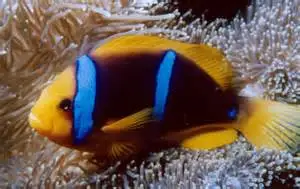
Blue Stripe Clownfish Marshall Islands Amphiprion chrysopterus
- Description
- Additional Information
- Reviews
Blue Stripe Clownfish Overview
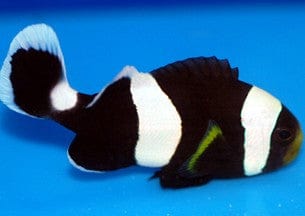
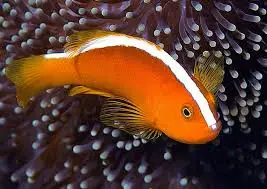
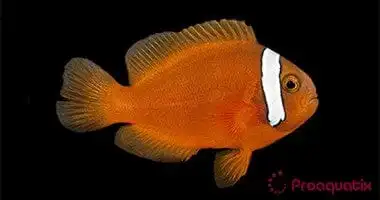
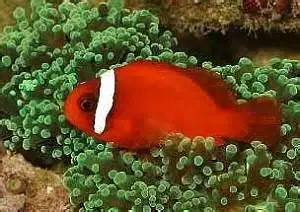
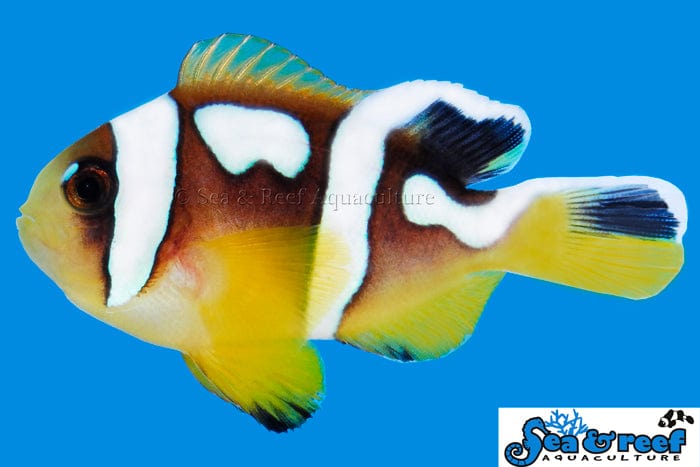
The Blue Stripe Clownfish, also referred to as the Orangefin anemonefish, can be found in the Marshall Islands. This species stands out immediately once it settles into a reef system. The contrast between its warm orange body and electric blue striping creates movement even when the fish stays still. This species, also known as the Orangefin Anemonefish, brings a different visual energy compared to common clownfish varieties.
Unlike more common Percula or Ocellaris types, this fish carries a slightly more natural reef presence. It doesn’t look overly bred or exaggerated. Instead, it mirrors what you would expect to see along Indo-Pacific reef slopes, especially around coral-rich zones where structure and flow shape behavior.
Blue Stripe Clownfish Behavior and Tank Presence
This species leans peaceful, but it still understands territory. Once established, it chooses a section of the tank and holds it with confidence rather than aggression.
You’ll notice:
- Short bursts of movement followed by hovering behavior
- Strong site attachment near rock or host structures
- Minimal chasing unless space becomes limited
Compared to other clownfish, it feels more relaxed but still active enough to keep the tank visually engaging.
Natural Habitat and Reef Role
In the wild, Amphiprion chrysopterus associates closely with anemones and reef shelter zones. It prefers areas where it can move between cover and open water without long exposure.
This behavior translates well into aquariums:
- Rockwork creates natural territory boundaries
- Moderate flow helps simulate reef conditions
- Optional hosting behavior may develop with anemones
They do not require an anemone to thrive, but they will often adopt one or a coral substitute over time.
Blue Stripe Clownfish Marshall Islands Fishbase Scientific Insights
From a scientific perspective, the Orangefin Anemonefish (Amphiprion chrysopterus) is one of the larger clownfish species within its group. It typically reaches around 4 inches and develops stronger coloration as it matures.
Key biological insights based on Fishbase data:
- Found across Indo-Pacific reef systems, especially coral-rich lagoons
- Lives in symbiosis with host anemones for protection
- Displays protandrous hermaphroditism (dominant fish becomes female)
- Juveniles show lighter coloration that deepens with age
This natural hierarchy plays a role in how pairs form and stabilize in aquariums.
Blue Stripe Clownfish Marshall Islands Compatible Tankmates
This species works well in peaceful reef communities. For best results, pair it with fish that do not compete aggressively for territory.
Compatible species for internal linking:
- Royal Gramma – Gramma loreto
- Firefish Goby – Nemateleotris magnifica
- Banner (Banggai) Cardinalfish – Pterapogon kauderni
- Yellow Watchman Goby – Cryptocentrus cinctus
- Coral Beauty Angelfish – Centropyge bispinosa
Avoid aggressive wrasses, large dottybacks, or predatory fish that may outcompete or stress this species.
Blue Stripe Clownfish Marshall Islands Feeding and Care Approach
Feeding stays simple and consistent. This species accepts a wide range of prepared foods without hesitation.
- Frozen mysis shrimp or brine shrimp
- Marine pellets designed for omnivores
- Occasional flake food for variety
Feed small portions multiple times daily to maintain energy without overloading the system.
Care Facts
Care Level: Easy
Temperament: Peaceful
Diet: Omnivore
Origin: Indo-Pacific
Minimum Tank Size: 30 gallons
Reef Safe: Yes
Coral Safe: Yes
Invertebrate Safe: Yes
Average Purchase Size
- Tiny: 0.75" – 1.25"
- Small: 1.25" – 2"
- Small Medium: 2" – 2.5"
- Medium: 2.5" – 3"
- Medium Large: 3" – 3.5"
- Large: 3.5" – 4"
- XL: 4"+
Sizing aligns with natural growth patterns and supplier grading.
Frequently Asked Questions About Blue Stripe Clownfish Marshall Islands
Is the Blue Stripe the same as the Orangefin Anemonefish?
Yes, Amphiprion chrysopterus is commonly referred to as both Blue Stripe Clownfish and Orangefin Anemonefish.
Are they aggressive like other clownfish?
They remain more peaceful than many clownfish but will still defend a small territory.
Do they need an anemone to survive?
No, they adapt well without one, though hosting behavior may still develop.
Can they be kept as a pair?
Yes, pairs can form naturally, with one fish becoming dominant over time.
Are they beginner friendly?
Yes, their adaptability and feeding response make them suitable for most reef keepers.
Final Notes on Blue Stripe Clownfish Marshall Islands
Each fish may show slight variation in stripe intensity and body tone. This variation reflects natural development rather than inconsistency.
This species brings a more natural reef look into your system while maintaining the durability expected from clownfish.
Reviews
There are no reviews yet.