



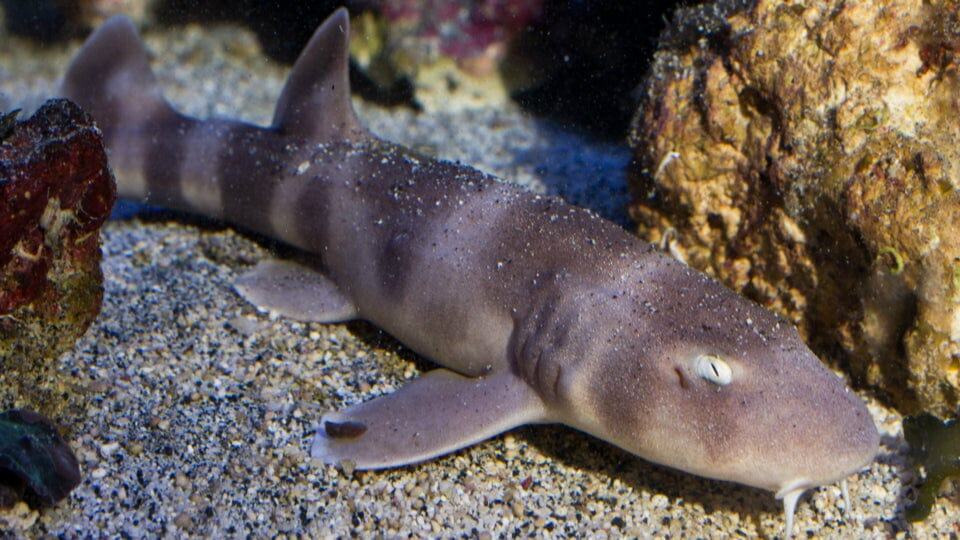
Zebra Shark Juvenile Australia Stegostoma fasciatum
Out of stock
- Description
- Reviews
Zebra Shark Juvenile Australia Behavior and Growth
Few species change as dramatically as the Zebra Shark. Juveniles start out with bold black and white striping that instantly grabs attention. As they mature, that pattern fades into a yellowish-brown body covered in dark spots.
This shift creates a completely different look over time. Many aquarists describe it as owning two distinct animals across one lifespan. Watching that transformation unfold in a home system adds long-term visual interest that few species can match.
Natural Habitat and Movement Patterns
The Zebra Shark originates from Indo-Pacific reef systems, ranging from East Africa to Australia, Japan, and New Caledonia. Juveniles from Australian waters are especially well-regarded for their resilience and adaptability in captivity.
This species stays close to the bottom and rarely rushes through the water column. Instead, it moves slowly and deliberately, often resting on the substrate with its body supported by its fins.
Like other carpet sharks, it can pump water across its gills without constant swimming. This ability allows it to remain still for long periods, making it better suited for large home aquariums than more active shark species.
Zebra Shark Juvenile Australia Tank Requirements
Planning ahead is critical with this species. While juveniles arrive at a manageable size, they grow into large adults that require serious space.
- Minimum tank size: 1,000 gallons for long-term care
- Prioritize tank footprint over height
- Use fine sand to prevent skin irritation
- Provide wide caves and ledges for daytime resting
These sharks produce a significant bio-load, so strong filtration and consistent water quality are essential. Stability matters more than constant adjustments.
Important: Copper-based medications must never be used. Exposure can lead to severe health issues.
Feeding and Growth Rate
Juveniles adapt well to prepared foods and typically accept a variety of meaty options.
Common foods include:
- Shrimp
- Squid
- Chopped marine fish
Feed juveniles three to four times per week to support steady growth. As the shark matures, feeding can shift to two to three times weekly.
Maintaining consistent water quality plays a direct role in growth rate and long-term health.
Building a System Around a Zebra Shark
This species fits best in a large predator-focused aquarium. It is not reef safe and will consume invertebrates when given the opportunity.
When selecting tankmates, focus on species that:
- Can handle a slow-moving, large predator
- Do not outcompete it during feeding
- Thrive in stable, high-volume systems
Zebra Shark Care Facts and Stats
- Care Level: Expert
- Temperament: Solitary, calm, primarily nocturnal
- Behavior: Bottom-dwelling; rests supported on fins; slow-moving
- Color Pattern: Juveniles striped; adults develop spotted pattern
- Body Structure: Cylindrical body with ridges and extended tail
- Diet Type: Carnivorous diet of crustaceans and fish
- Reef Compatibility: Not suitable for reef systems
- Water Conditions: 72–82°F | 1.023–1.026 salinity | pH 8.1–8.3
- Maximum Size: Up to 8 feet; most captive specimens reach 5–6 feet
- Origin Region: Indo-Pacific
- Tank Requirement: 2000+ gallons minimum; larger systems strongly recommended
Reviews
There are no reviews yet.