




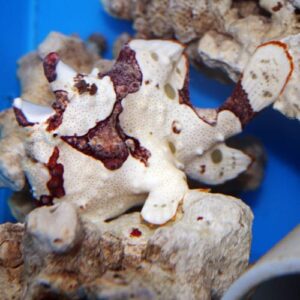
Wartskin Angler Antennarius maculatus

- Description
- Additional Information
- Reviews
Wartskin Angler Fish with Incredible Camouflage and Ambush Hunting Behavior
The Saltwater Fish Wartskin Angler, Antennarius maculatus, stands out as one of the strangest predators found in marine aquariums. This Wartskin Angler Fish blends into live rock, macroalgae, and coral structures with ease while waiting patiently for prey to swim too close. Their textured skin and shifting coloration help them disappear into reef environments almost instantly.
Why the Wartskin Angler Works Well in Species-Focused Predator Aquariums
Among the many species found in our Anglers collection, the Wartskin Angler remains a favorite for hobbyists who enjoy unusual ambush predators. Unlike active swimmers, this fish spends much of the day perched quietly while observing its surroundings. Once food appears, it reacts with explosive speed that catches many aquarists off guard the first time they witness it.
The Wartskin Angler Fish can display white, yellow, maroon, orange, tan, brown, or purple coloration depending on collection region and environment. No two specimens ever seem to look exactly alike.
Wartskin Angler Care and Aquarium Requirements
The Wartskin Angler does best in a stable saltwater aquarium with moderate flow and plenty of open resting zones. Rockwork should provide shaded areas and low-traffic sections where the fish can perch comfortably throughout the day.
Unlike many aggressive fish, this species rarely chases tankmates around the aquarium. Instead, it relies on stealth and patience. However, anything small enough to fit inside its mouth may eventually become food.
Recommended Tank Conditions
- Minimum Aquarium Size: 20 gallons
- Water Temperature: 75°F–82°F
- pH Range: 8.1–8.4
- Salinity: 1.020–1.025
- Water Flow: Moderate
- Reef Safe: No
- Temperament: Aggressive predator
- Max Size: Approximately 4 inches
Feeding the Wartskin Angler Fish in Captivity
The Wartskin thrives on meaty marine-based foods. Many specimens accept frozen offerings after acclimation, although some initially prefer live prey items.
Common foods include:
- Shrimp
- Silversides
- Squid
- Clam
- Krill
- Chopped crustacean flesh
Overfeeding should be avoided. Anglers naturally consume large meals less frequently than active swimming species.
Temperament and Compatibility
Although relatively calm in behavior, the Wartskin should never be considered community safe with smaller fish or ornamental shrimp. Their hunting instincts remain strong even in captivity.
Suitable tankmates usually include:
- Larger semi-aggressive fish
- Triggerfish
- Puffers
- Larger wrasses
- Robust predator species
Avoid housing this species with:
- Small gobies
- Clownfish
- Decorative shrimp
- Tiny wrasses
- Nano fish species
Color Changes and Natural Camouflage
One of the most fascinating traits of this fish involves its ability to blend into surrounding rockwork and coral textures. Juvenile Wartskin Anglers often display brighter coloration, while mature individuals may develop darker or more muted camouflage patterns.
Their wart-like skin texture helps break up body shape and creates the illusion of sponge growth or encrusted rock surfaces.
Purchase Size Information
Approximate purchase size:
- Small: 1–2 inches
- Medium: 2–3 inches
- Large: 3–4 inches
Individual coloration and markings vary naturally between specimens. Every Wartskin Angler Fish develops its own unique appearance over time.
Reviews
There are no reviews yet.