




Red Breasted Wrasse Care Guide and Aquarium Requirements
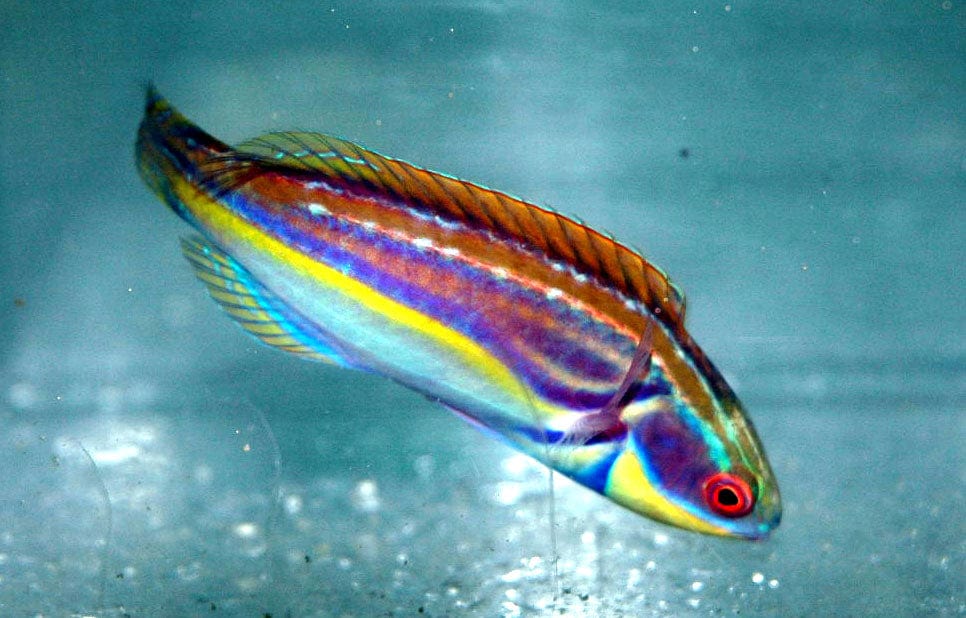
The Red Breasted Wrasse is a striking marine fish admired for its bold coloration and strong presence in large aquariums. Aquarists often refer to this species as the Red Breasted Maori Wrasse because of its distinctive body markings.
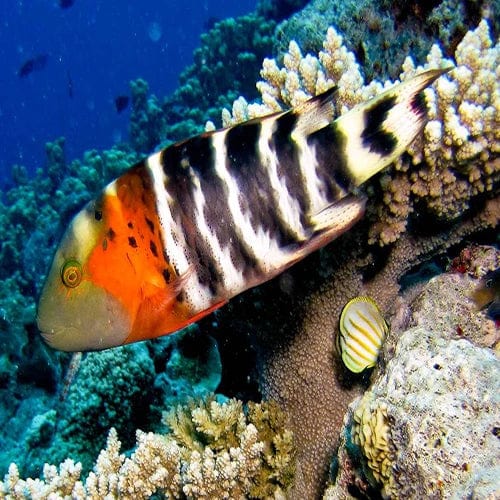
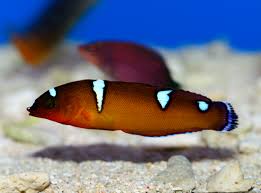
This wrasse displays six to seven vertical white stripes across a reddish-brown body. In addition, a bright yellow-orange patch surrounds the pectoral fin.
Together, these colors create a dramatic contrast that stands out in a marine aquarium. As a result, the Red Breasted Wrasse often becomes a focal point of the tank.
Because of its potential size, aquarists should plan for a spacious aquarium. A large environment helps maintain natural swimming behavior.
Appearance and Distinctive Features of the Red Breasted Wrasse
The Red Breasted Wrasse develops a long and slightly elongated body. Strong fins help it move quickly through open water and reef structures.
Its striped body pattern provides camouflage among reef rubble and rock formations. Meanwhile, the orange patch near the pectoral fin remains highly visible.
These visual features make the species easy to recognize among larger wrasses.
Natural Habitat of the Red Breasted Wrasse
In the wild, the Red Breasted Wrasse inhabits lagoons, reef edges, and rubble zones. These areas provide shelter and abundant feeding opportunities.
The species often patrols along the bottom of the reef while searching for prey. It may also rest on the sand or near rock structures.
Therefore, aquarists should replicate this environment in captivity.
Provide a large aquarium with open swimming areas and stable rock formations. Additionally, include sandy substrate that allows natural behavior.
Aquarium Setup for the Red Breasted Wrasse
The Red Breasted Wrasse grows into a substantial marine fish. Consequently, it requires a large saltwater aquarium with ample swimming space.
A tank with strong filtration and stable water parameters supports long-term health. In addition, secure rockwork helps recreate natural reef habitat.
Choose tank mates carefully. Peaceful species help reduce stress during acclimation.
Although generally shy at first, this wrasse may become territorial once established. Therefore, monitor interactions with other fish.
Behavior and Compatibility
The Red Breasted Wrasse often appears cautious during the first weeks in an aquarium. However, it becomes more confident after acclimation.
This species frequently searches the sand and rock for food. During feeding activity, it may move substrate while hunting prey.
Because of its predatory nature, avoid keeping very small fish or delicate invertebrates in the same aquarium.
Diet and Feeding
The Red Breasted Wrasse is a carnivorous marine fish. Therefore, it requires a varied diet of protein-rich foods.
Offer foods such as:
-
Marine plankton
-
Frozen mysis shrimp
-
Enriched brine shrimp
-
Chopped seafood
Feed several smaller meals throughout the week. A varied diet supports growth and vibrant coloration.
Approximate Purchase Size
Small: 2" – 3"
Medium: 3" – 5"
Large: 5" – 7"
X-Large: 7" or larger
Reviews
There are no reviews yet.