




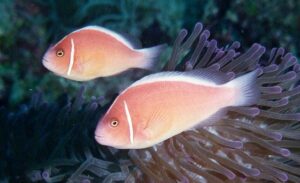
Pink Skunk Clownfish Pair Fiji Amphiprion perideraion
Out of stock
- Description
- Reviews
Pink Skunk Clownfish Pair Fiji Pair Amphiprion perideraion for Peaceful Reef Systems
Pink Skunk Clownfish Pair Fiji offers a naturally calm presence, making it a strong fit for reef aquariums that prioritize stability and compatibility. This bonded pair arrives already established, reducing territorial disputes and helping your tank settle faster from day one.
Unlike more aggressive clownfish varieties, Amphiprion perideraion leans toward a softer temperament. Its pale pink to apricot body tone, paired with a clean white dorsal stripe, creates a subtle but eye-catching contrast that stands out without overpowering the aquascape.
Pink Skunk Clownfish Pair Fiji Pair Behavior and Pairing Advantage
A pair changes how clownfish behave in your system. These two fish already recognize each other and move as a unit, often staying within the same zone of the aquarium.
Instead of competing for dominance, they establish hierarchy quickly and maintain a shared territory. This reduces stress compared to introducing two separate clownfish and hoping they pair naturally.
Expect synchronized swimming, gentle hosting behavior, and minimal chasing once acclimated.
Pink Skunk Clownfish Pair Fiji Ideal Aquarium Setup
This species adapts well, but performs best in a stable reef environment with thoughtful structure.
- Minimum tank size: 20–30 gallons for a pair
- Aquascape: Open swim space with rockwork for shelter
- Substrate: Fine sand or natural reef substrate
- Optional host: Bubble Tip Anemone or coral substitute
Consistent water parameters matter more than complexity. Stability drives long-term success with this species.
Temperature between 75–78°F and stable salinity levels support steady behavior and appetite.
Pink Skunk Clownfish Pair Fiji Temperament and Compatibility
Pink Skunk Clownfish remain one of the more peaceful clownfish options available. That said, they can still be pushed around by aggressive tankmates.
Avoid housing them with:
- Larger predatory fish
- Highly territorial clownfish species
- Aggressive wrasses or dottybacks
They pair well with:
Their calm nature makes them ideal for community reef builds where aggression control matters.
Pink Skunk Clownfish Pair Fiji Feeding and Daily Care
Feeding stays simple. This species accepts a wide range of foods and rarely shows picky behavior.
- Frozen foods like mysis shrimp
- Marine pellets designed for omnivores
- Occasional flake food for variety
Feed small portions two to three times daily. Overfeeding creates more issues than underfeeding in most reef systems.
Appearance and Color Development
This variety does not rely on heavy black patterning like Onyx or Percula strains. Instead, it develops a softer look that fits clean, natural reef aesthetics.
- Body color ranges from light pink to apricot
- Thin white stripe runs along the dorsal line
- Minimal black edging keeps the appearance clean
Under proper lighting, the coloration becomes more noticeable, especially in mature specimens.
Purchase Size Options
- Tiny: 0.8 – 1.1 inches
- Small: 1.1 – 1.25 inches
- Medium: 1.26 – 1.5 inches
- Medium Large: 1.51 – 1.75 inches
- Large: 1.75 – 2 inches
- XL: 2 – 2.75 inches
Pairs are selected to remain compatible and stable during acclimation.
Frequently Asked Questions About Pink Skunk Clownfish Pair Fiji
Are these clownfish already paired together?
Yes, this listing includes a bonded pair that has already established compatibility and hierarchy.
Are Pink Skunk Clownfish aggressive?
They show lower aggression compared to most clownfish, but still defend a small territory.
Do they need an anemone to thrive?
No, they do not require one, though they may host if introduced properly.
Can this pair be added to a community reef tank?
Yes, as long as tankmates remain peaceful and non-aggressive.
Will the pair stay together in the aquarium?
A pair typically stays close and moves together once acclimated.
Final Notes
Each pair is shipped with care using packaging designed for live arrival and reduced transit stress. Slight variations in coloration and pattern may occur, giving each pair a unique appearance.
This is a strong choice for reef keepers looking to add movement, color, and behavior without introducing unnecessary aggression into the system.
Reviews
There are no reviews yet.