


Emperor (Imperator) Angelfish Juvenile Pomacanthus imperator
- Description
- Additional Information
- Reviews
Emperor Angelfish Juvenile Behavior, Care, and Species Facts
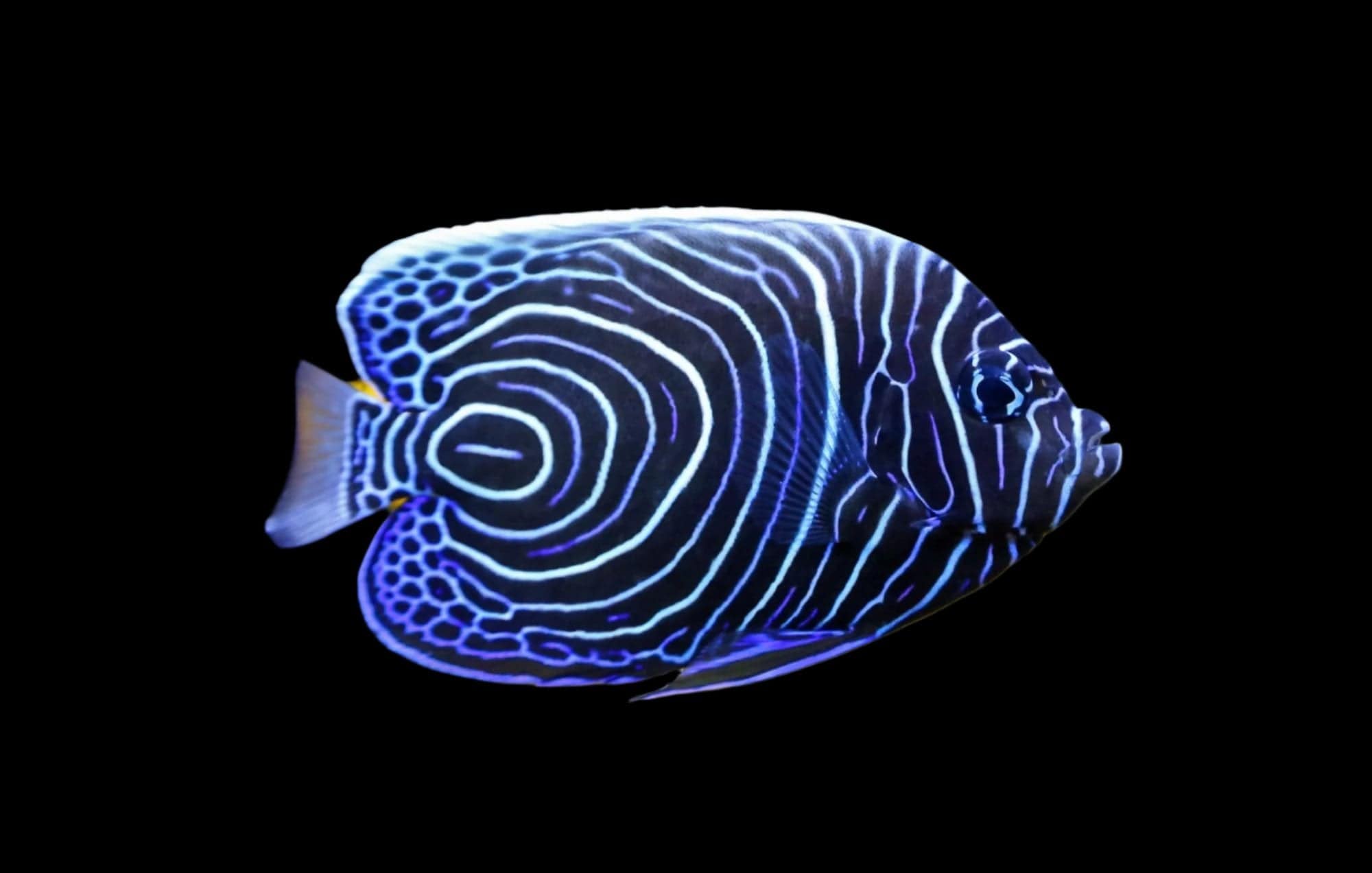
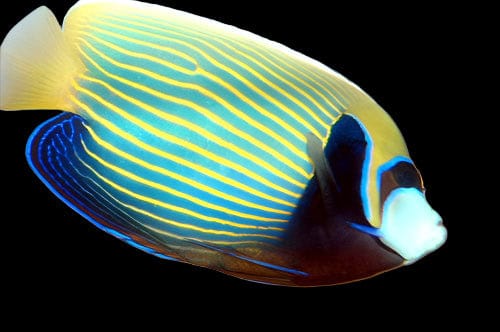
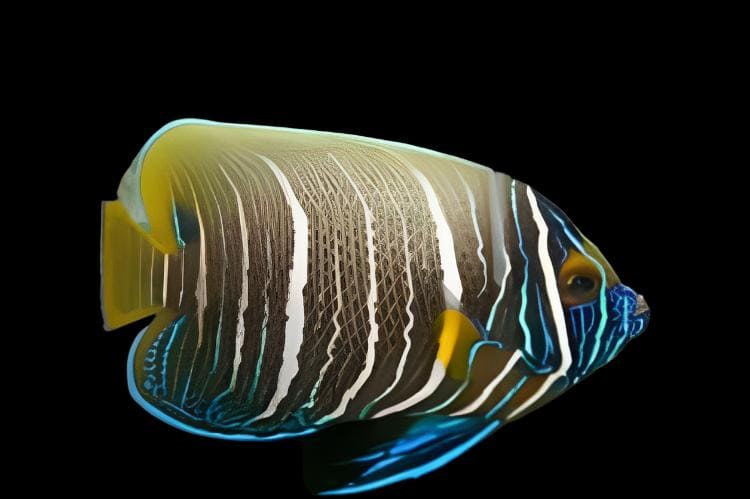
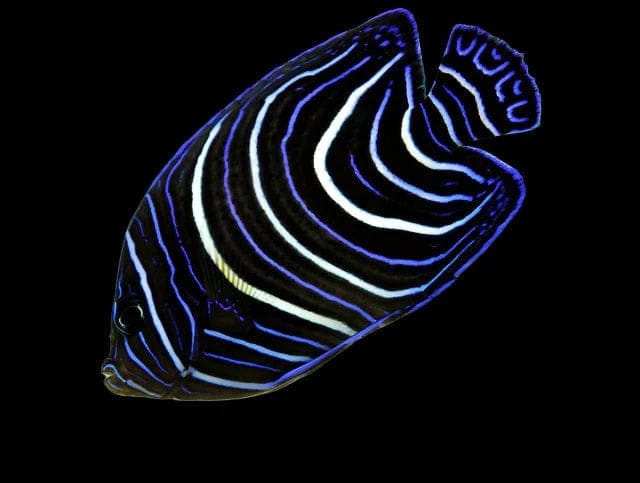
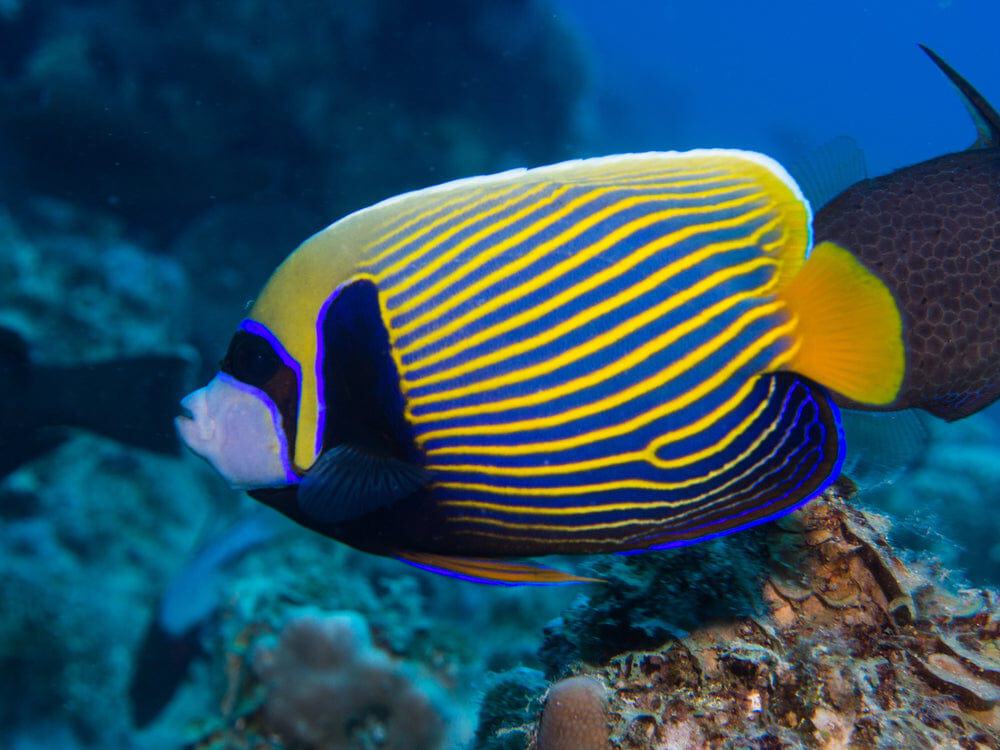
The juvenile Emperor Angelfish shows off bold blue tones with curved white-and-yellow striping, creating a striking look in a larger marine aquarium. It moves with purpose through rockwork, often staying close to the structure while grazing and observing its surroundings. This stage is especially eye-catching and develops into a dramatically different adult coloration over time.
Juvenile Emperor Angelfish Placement Within Angelfish Species
Within a broader range of angelfish options, the juvenile Emperor Angelfish (often called the Imperator Angelfish) stands out for its early-life patterning and steady behavior. It adapts best to established aquariums with mature rock systems, where it can settle in and gradually establish territory without constant disruption.
Natural Appearance and Behavior of Juvenile Emperor Angelfish
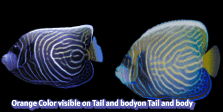
The juvenile form of Pomacanthus imperator features a deep blue body with curved white and yellow lines. As it matures, this pattern transitions into the bold horizontal striping seen in adult specimens.
It tends to stay near rock formations, using caves and crevices for shelter. Movement remains controlled and consistent, making it easy to monitor within the aquarium.
Aquarium Setup for Juvenile Emperor Angelfish Stability
A minimum tank size of 120 gallons is required to support long-term growth. Rockwork should include:
- caves and shaded hiding areas
- open swimming space
- stable structures for grazing
Maintain consistent parameters:
- Temperature: 74–78°F
- pH: 8.1–8.4
- Specific Gravity: 1.020–1.025
This species grows large and requires long-term planning when setting up the aquarium.
Feeding and Daily Diet Requirements
Juvenile Emperor Angelfish require a varied omnivorous diet to support growth and coloration.
Recommended foods include:
- marine pellets and angelfish preparations
- mysis shrimp and frozen foods
- marine algae and sponge-based foods
Frequent feeding and access to natural grazing surfaces help maintain health.
Reef Compatibility and Tank Behavior
This species is considered mostly reef safe, on the chance that they may nip at:
- corals
- sessile invertebrates
Temperament is semi-aggressive. It can coexist with other species when provided with adequate space but may become territorial as it matures. Keeping only one specimen per tank is recommended unless pairing is carefully managed.
Care Facts and Specifications
- Care Level: Moderate
- Temperament: Semi-Aggressive
- Diet: Omnivore
- Reef Compatibility: No
- Minimum Tank Size: 120 Gallons
- Maximum Size: 15 Inches
- Temperature: 74–78°F
- pH: 8.1–8.4
- Specific Gravity: 1.020–1.025
- Scientific Name: Pomacanthus imperator
Approximate Purchase Sizes
- Small: 1.25" to 1.75"
- Small Medium: 1.75" to 2.75"
- Medium: 2.75" to 3.75"
- Medium Large: 4.5" to 5.5"
Reviews
There are no reviews yet.