



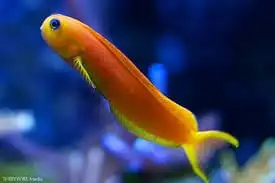
Gold Blenny Fiji Atrosalarias fuscus
Out of stock
- Description
- Reviews
Gold Blenny Atrosalarias fuscus Care Guide for Reef Aquariums
The Gold Blenny adds utility and personality to a saltwater tank. This active fish spends much of the day perched, grazing, and darting between rockwork. Sourced from Fiji, Atrosalarias fuscus brings a bright golden look and a practical algae-picking habit to reef systems.
Many hobbyists choose Gold Blenny specimens for their hardy nature and entertaining behavior. This blenny species stands out for its curious posture, elongated dorsal fin, and strong interest in algae-covered surfaces.
Why the Gold Blenny Works Well in Reef Tanks
The Gold Blenny is reef safe and usually peaceful with unrelated tank mates. It does well in established aquariums that offer rockwork, grazing surfaces, and secure hiding spots. This fish often claims a perch and returns to it throughout the day.
A secure lid matters. The Gold Blenny can jump, especially during acclimation or when startled. Tanks with narrow openings or loose covers increase that risk.
Gold Blenny Appearance and Natural Behavior
The Gold Blenny has an elongated body, a long dorsal fin, and a watchful expression common in combtooth blennies. Color can range from golden yellow to tan or dusky gold, depending on the individual and collection region.
In the wild, Atrosalarias fuscus inhabits shallow reef zones and sheltered areas. It hides among coral branches and reef structure, then emerges to graze and explore. This species usually lives alone and stays busy throughout the day.
Tank Setup for Gold Blenny Success
A 30-gallon aquarium should be the minimum starting point. Stable marine parameters and mature rockwork will help the Gold Blenny settle in faster. Add caves, ledges, and crevices so it can retreat when needed.
This fish may become territorial toward similar-shaped species. That includes other blennies, some gobies, and dartfish in tighter aquariums. More space and more structure reduce conflict.
Recommended Aquarium Conditions
- Minimum tank size: 30 gallons
- Temperature: 72–78°F
- pH: 8.1–8.4
- Specific gravity: 1.020–1.025
- Diet: Omnivore
- Reef safe: Yes
- Temperament: Peaceful
- Max size: 4 inches
- Origin: Fiji
- Scientific name: Atrosalarias fuscus
Feeding the Gold Blenny in Captivity
The Gold Blenny benefits from frequent plant-based feeding. Offer spirulina-rich foods, marine algae, seaweed sheets, and herbivore-friendly pellets. Feed two to three times daily in smaller portions. While algae matters, variety helps long-term health. Supplement the diet with frozen mysis or brine shrimp from time to time. A well-fed Gold Blenny is more likely to graze naturally without becoming overly aggressive at feeding time.
Temperament and Compatibility
Thid Blenny stays peaceful with many reef-safe fish. It usually mixes well with clownfish, cardinalfish, grammas, and other community species that do not occupy the same niche. Avoid crowding it with other blennies unless the aquarium is large and heavily structured. This fish values its perch and may defend that space once established.
Care Facts at a Glance
This Blenny suits beginner and intermediate reef keepers because it combines resilience with useful algae-grazing behavior. It thrives in mature tanks with stable salinity, steady feeding, and secure rockwork.
Its body can reach about 4 inches in captivity, though the species may grow larger in the wild. Adults of Atrosalarias fuscus inhabit shallow reef areas and lay adhesive eggs attached to the substrate.
Quick Care Stats
- Care level: Easy
- Family: Blenniidae
- Subfamily: Salariinae
- Environment: Marine, reef-associated
- Depth range in nature: 2–12 meters
- Reproduction: Oviparous
- Social behavior: Solitary
- General feeding style: Grazer and omnivore
Commonly Asked Questions about the Gold Blenny
Is the Gold Blenny reef safe?Yes. This Blenny is considered reef safe and does not target corals. It mainly grazes algae and biofilm.
What does a this Blenny eat?It should eat spirulina foods, marine algae, seaweed, and other algae-based preparations. Occasional frozen foods add variety.
Can this Blenny live with gobies?Sometimes, yes. Problems are more likely in smaller tanks where both fish compete for similar territory.
How large does a this Blenny get?Most aquarium specimens reach about 4 inches. Wild individuals of Atrosalarias fuscus can grow larger.
Does this fish need a lid?Yes. Like many blennies, it can jump. A tight-fitting lid is strongly recommended.
Reviews
There are no reviews yet.