



Watermelon Chalice


- Description
- Additional Information
- Reviews
Add Eye-Catching Color with a Watermelon Chalice Coral
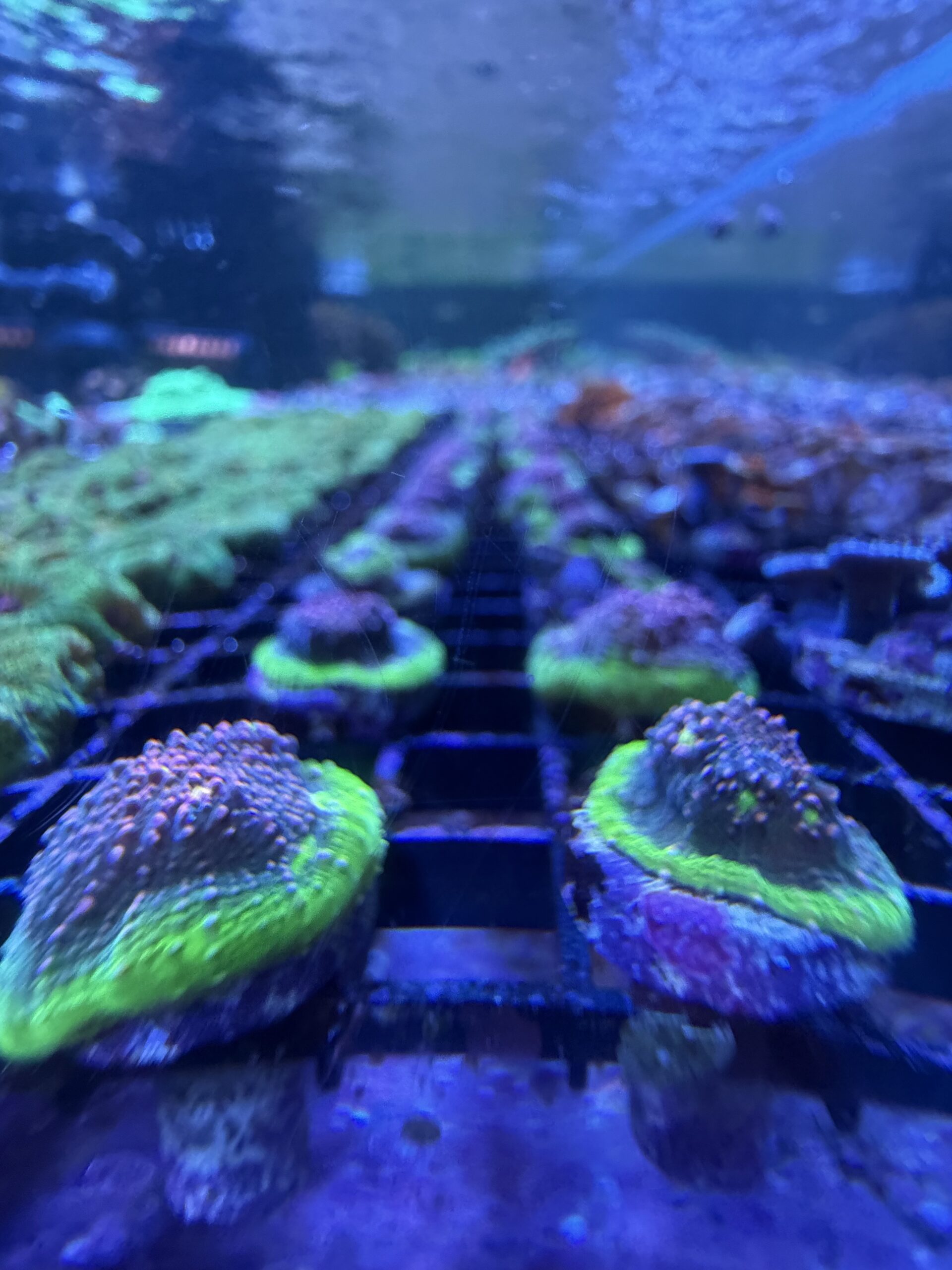
Bring a splash of neon and a bit of attitude to your tank with the Watermelon Chalice Coral. Its red and pink spots paired with the glowing-green base give it a unique color-profile in your aquarium. with It’s not just about the color, though—this coral thrives where other LPS might fuss. Give it a stable tank and a little space, and it’ll quietly spread across your rockwork like a living work of art.
How the Watermelon Chalice Stands Out
It’s not just one thing. It’s the contrast, the swirling texture, and the way it seems to shift in tone depending on the angle and lighting. No two frags look exactly alike, and that’s part of the charm. Some frags show bold red eyes across a green base, while others lean heavily into pink or even purple streaks.
-
Rich neon green with red or pink streaks
-
Unique “eye” patterns that evolve as it grows
-
Encrusting growth that fills in rockwork naturally
-
Great addition for low-light zones
Where and How to Place It
This coral doesn’t demand the spotlight—literally. You’ll get the best color by placing it in a low to moderate light area, typically on the sand bed or lower third of your aquascape. High light tends to wash out its color, so skip the prime real estate and let it shine from the sidelines.
-
Lighting: Keep it mellow (50–100 PAR works well)
-
Flow: Gentle, with just enough to keep detritus off the surface
-
Space: Give it a buffer—while it’s not overly aggressive, its short sweepers can still reach
Feeding: Optional but Worthwhile
You don’t need to feed your Watermelon Chalice, but it’s worth the effort. Occasional target feeding with powdered coral foods or small meaty bits can boost growth and deepen color.
-
Feed once or twice a week, ideally after lights go out
-
Turn off flow briefly so food doesn’t get blown away
-
Expect better polyp extension over time
Common Questions About Watermelon Chalice
Q: Is this coral difficult to care for?
Not at all. It’s one of the easier chalices to grow, as long as your parameters are stable. It doesn’t need intense lighting or aggressive feeding.
Q: How fast does it grow?
Moderate pace. It’ll start encrusting after a few weeks and then pick up speed—especially with occasional feeding.
Q: Can I glue it onto the rock?
Yes, but use a flat surface if possible. Chalices grow outward in a plate-like shape, so give it room to sprawl.
Q: Will it fight with nearby corals?
It might. Like most chalices, it can extend short sweeper tentacles. You can always leave 2 to 3 inches of space if you're unsure about spacing as a default.
Watermelon Chalice Coral Care At-a-Glance
| Parameter | Ideal Range |
|---|---|
| Lighting | Low to moderate (50–100 PAR) |
| Flow | Moderate and indirect |
| Placement | Sand bed or lower rock |
| Feeding | Optional, but encouraged |
| Growth Style | Encrusting |
| Aggression Level | Mild (short sweepers) |
Watermelon Chalice Final Notes
The Watermelon Chalice brings a lot to the table for such a low-key coral. It doesn’t require fancy equipment, and it’s hardy enough to handle most mixed reef setups. Whether you're building out your LPS section or just want something that glows under blues, this one won’t disappoint.
Note: Each frag varies slightly in color and eye placement—that’s the beauty of live coral. We select pieces that meet our standards, but nature always adds a little variety.

Reviews
There are no reviews yet.